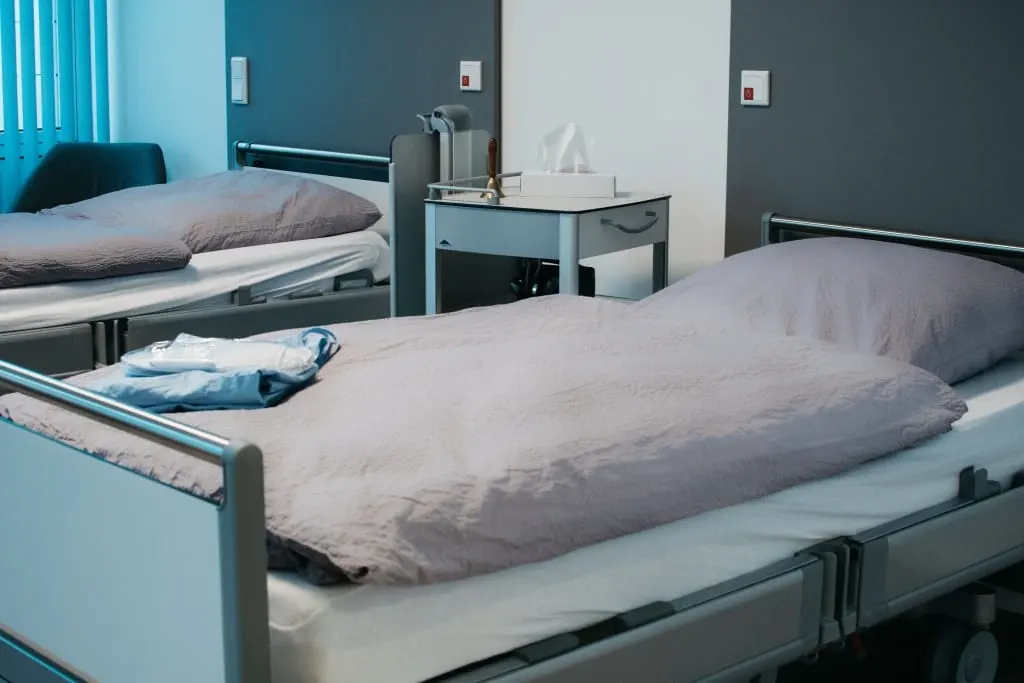
Regained weight, complaints after eating or persistent heartburn? If an earlier stomach surgery has not brought the desired result or is causing complaints, a specialised consultation clarifies the cause, even if you had your operation at another clinic. You are advised at Klinik am Seestern in Düsseldorf.
after gastric sleeve, gastric bypass or gastric band
Procedure
endoscopic or surgical
German health insurance
possible with an indication in line with the guidelines
At a glance
Everything important about revision
Common concerns
Weight gain, dumping syndrome, reflux
First operation elsewhere
no obstacle, the consultation is open to everyone
Consultation
in person, by phone or by video
Diagnostics
Endoscopy, imaging, functional and laboratory diagnostics
Procedure
endoscopically from the inside or surgically
German health insurance
possible with an indication in line with the guidelines, without an advance application
Self-pay
possible, financing through our financing partner
Aftercare
Check-ups, app and personal coach
Even after an operation at another clinic: the consultation is open to everyone
The cause first: targeted diagnostics, without assigning blame
Close by: consultation, preliminary examination and aftercare in Düsseldorf
Revision after stomach surgery in Düsseldorf: consultation at Am Seestern
Stomach surgery is an important step, but not always the last one. Sometimes the weight comes back or never falls far enough, sometimes complaints arise such as dumping syndrome after a gastric bypass or reflux after a gastric sleeve.
At Klinik am Seestern in Düsseldorf we advise you on this together with the Weight Doctors, who have their obesity centre in the same building. In their specialist consultation, the causes of your complaints are clarified in a targeted way and a solution is developed, an endoscopic procedure or corrective surgery. This also applies if your first operation took place at another clinic.
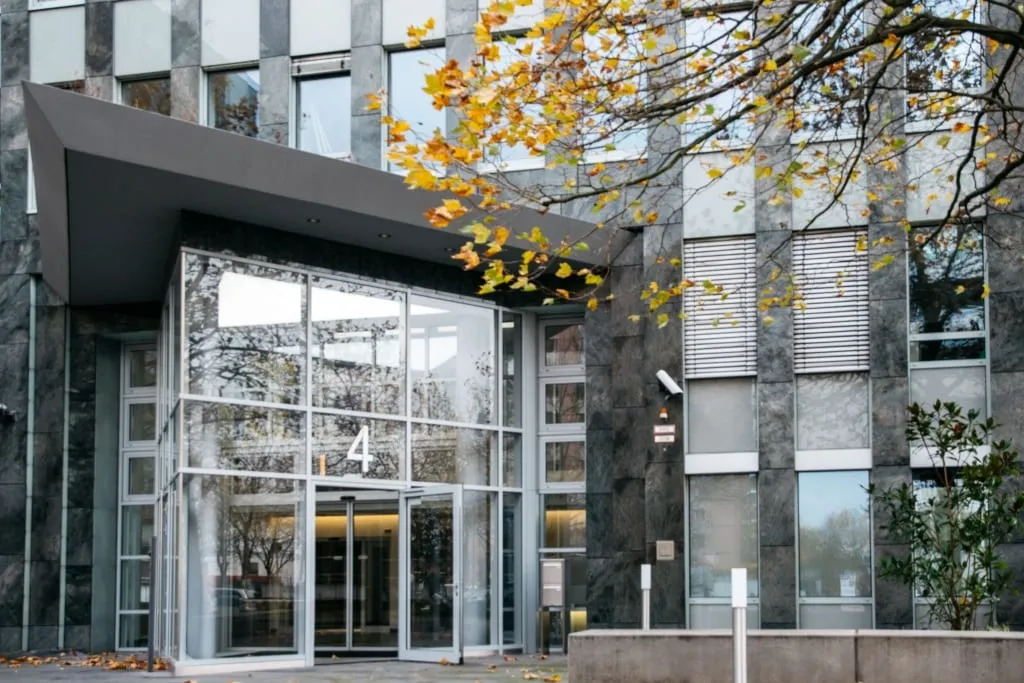
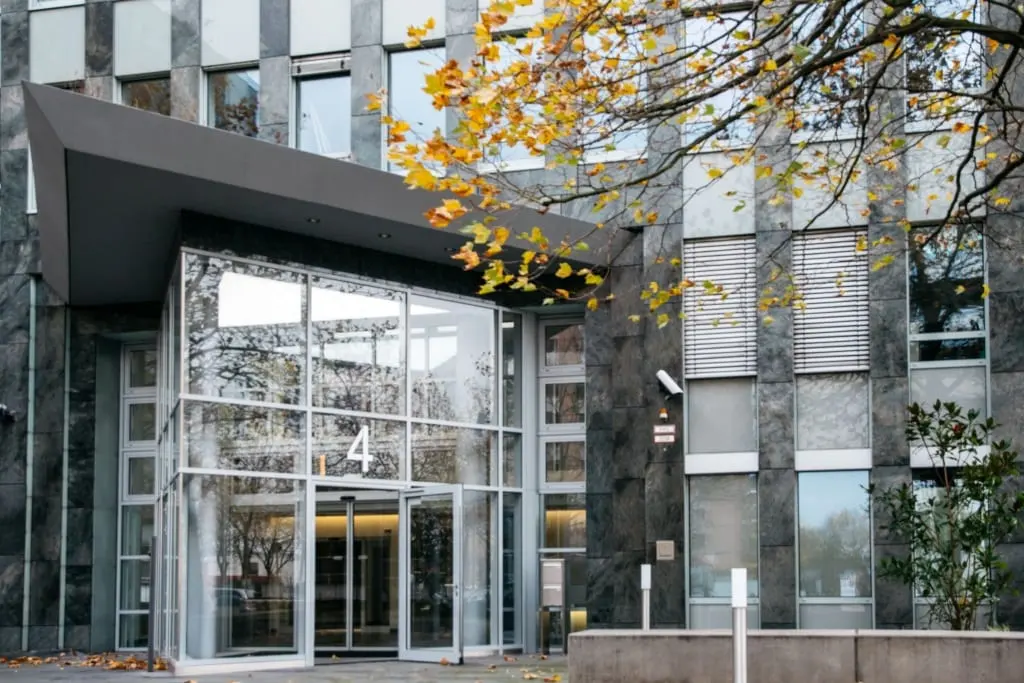
For your appointments you come to our specialist clinic in Lörick, on the left bank of the Rhine in the Am Seestern office district near the B7. The U77 runs from the main station to the Am Seestern stop without a change, and you can park on site free of charge. The consultation is also possible by phone or by video.
Treatment
Type of appointment
Appointment
Your details
Confirm
Which treatment are you interested in?
Click on the area you are interested in:
No matching treatment found. Choose “Still undecided?” in an area and we will call you.
Obesity is a chronic disease that often needs long-term treatment in several stages. Complications or insufficient weight loss after stomach surgery are not unusual and not a personal failure.
In addition to weight gain, dumping syndrome and reflux, the concerns dealt with in the consultation also include swallowing difficulties, vomiting, problems with a gastric band such as slipping (slippage) or moving (migration), chronic pain and food intolerances.
Even a well-performed operation only works as well as aftercare and everyday life allow; often, however, there are medical reasons:
01
Anatomical changes
The stomach, the pouch or the connection to the small intestine (anastomosis) can widen over time, so that the restriction diminishes.
02
Hormones and metabolism
The body adapts and defends its accustomed set point, which is measurable and in many cases treatable.
03
Life circumstances
Everyday life, stress, medication or new phases of life influence the course.
04
High-calorie drinks
They simply flow through a gastric sleeve and are hardly slowed down by the narrower shape.
Weight gain after stomach surgery
After the initial success, the weight comes back completely or partly in some patients, or it does not go down far enough from the start. This is more common than most people think and is only rarely due to a lack of discipline.
Every stomach reduction changes the anatomy, and this can change again over time. Typical signs are that you can eat larger portions again, the feeling of fullness diminishes, cravings return and your weight has been rising again for months.
Endoscopy and imaging are used to measure whether and how much the stomach, pouch or anastomosis has widened. This determines the route that is an option for you:
Endoscopic reduction
An enlarged pouch or a widened anastomosis is made smaller again from the inside, minimally invasively and without another open operation.
Re-sleeve
If the gastric sleeve has widened again, it is surgically reduced once more and the restriction is restored.
Conversion to a bypass
If the effect of the gastric sleeve diminishes, switching to a bypass procedure can be an option.
Bypass revision
The limb lengths or the anastomosis are adjusted in order to strengthen the restriction and the metabolic effect.
In addition, medically supervised GLP-1 therapy can help to stabilise the weight. How much weight you lose again after a revision depends on the cause and the procedure and cannot be guaranteed in advance.
Dumping syndrome after gastric bypass
After a gastric bypass, food reaches the small intestine more quickly. In some patients, this can cause dumping syndrome, that is, circulatory and digestive complaints that make eating, and thus everyday life, a burden. This is a known side effect and treatable. A distinction is made between two forms, and many of those affected have elements of both:
Early dumping
shortly after eating, triggered by the stomach emptying too quickly into the small intestine, with nausea, palpitations, sweating, dizziness, abdominal cramps or diarrhoea.
Late dumping
one to three hours after eating, triggered by reactive hypoglycaemia, with trembling, cravings, weakness or difficulty concentrating.
The complaints occur mainly after sweet or carbohydrate-rich meals and can range up to fainting spells and circulatory collapse. A dumping score, a glucose tolerance test and an endoscopy show the form and the cause.
The first step is always adapted eating habits with a fixed meal structure and little sugar, and nutritional advice can support you with this. If that is not enough, an anastomosis that is too wide can be reduced endoscopically so that the stomach pouch empties more slowly; a bypass revision is an option as a surgical route.
Reflux after gastric sleeve
After gastric sleeve surgery, reflux can occur in some cases, or existing reflux can become worse. The narrow gastric sleeve no longer has a reservoir, and the pressure inside it is higher. Often there is also a hiatus hernia, in which part of the stomach slides upwards through the opening in the diaphragm and which sometimes already existed unnoticed before the operation, or a narrowing (stenosis) in the sleeve.
Typical signs are persistent heartburn and acid regurgitation, burning behind the breastbone especially when lying down and at night, swallowing difficulties, a dry cough, hoarseness or a feeling of a lump in the throat.
Persistent, untreated reflux can damage the oesophagus in the long term. Acid blockers relieve the symptoms but do not remove the cause; anyone who takes them permanently without things really getting better should have it investigated where the reflux comes from.
The core of the diagnostics is gastroscopy, supplemented if necessary by an examination of swallowing or a pH measurement. Depending on the findings, gentle endoscopic and minimally invasive procedures are an option, or the conversion of the gastric sleeve into a gastric bypass, which can also support weight loss.
Your route to revision
This is how a revision proceeds if you are advised in Düsseldorf:
Step 1
Beforehand
Consultation in Düsseldorf. In person at Klinik am Seestern, by phone or by video: we discuss your complaints, your medical history and your previous operation. You can book your appointment online.
Step 2
Analysis
Your medical history. Experienced specialists clarify what the cause could be, whether a corrective procedure makes medical sense, which procedure is suitable and whether German statutory health insurance can cover the costs.
Step 3
Diagnostics
Targeted examinations. Endoscopy, radiological examinations such as imaging of swallowing, and functional and laboratory diagnostics are coordinated for you.
Step 4
Findings
Cause and plan. The findings are evaluated together and the cause of your complaints is named, without assigning blame. From this, your personal treatment plan is drawn up, endoscopic or surgical.
Step 5
Procedure
The procedure in Wertheim. Procedures take place at the Weight Doctors® Nationalklinik in Wertheim, carried out by specialists who specialise in obesity surgery and corrective procedures.
Step 6
Afterwards
Aftercare in Düsseldorf. Check-ups, the app and a personal coach continue to support you. If you wish, further steps can follow, for example GLP-1 therapy for stabilisation or a tightening procedure.
What does a revision cost, and when does German statutory health insurance pay?
With a medical indication in line with the guidelines, there is a chance that German statutory health insurance will cover the costs of a revision. This applies, for example:
with documented weight gain and a proven cause
with proven reflux
with dumping syndrome that does not improve sufficiently with conservative measures
For German statutory health insurance to cover the costs, a multimodal concept is usually required, a preparation programme of six months, which is not itself a benefit of the health insurer. There is no advance application: before the procedure the Weight Doctors check all requirements, organise the appointments and then bill your health insurer directly.
Without cost coverage, the treatment is possible as a self-pay service. The price depends on the procedure and is discussed with you in the consultation; financing is possible through our financing partner. You can read more about the requirements under Costs and German health insurance.
Frequently asked questions
What is a revision after stomach surgery?
A revision is a further bariatric procedure for people who have regained weight after earlier stomach surgery, have not lost enough weight or suffer from complaints. Depending on the cause, it is carried out surgically or endoscopically, from converting a gastric sleeve into a gastric bypass to a correction from the inside.
Did I do something wrong?
No. Obesity is a chronic disease with many influencing factors. Complications or insufficient weight loss after stomach surgery are not a sign of personal failure, but require targeted further medical treatment.
I had my operation at another clinic. Can I still come?
Yes. The consultation is open to everyone, regardless of where the original procedure took place, even if it was abroad.
Why have I gained weight again after stomach surgery?
In most cases, the gastric pouch, the connection to the small intestine (anastomosis) or the gastric sleeve has widened again, so that the restriction decreases. Hormonal adjustments and the metabolism also play a role, as do stress, medication or new phases of life. The diagnostic work-up looks for the specific cause in your case.
Is a correction possible without another major operation?
In many cases, yes. An enlarged pouch or a widened anastomosis can often be reduced again endoscopically, that is, from the inside and without an incision. The diagnostic work-up shows whether this is possible in your case.
What is dumping syndrome?
A known side effect after a gastric bypass. Because food reaches the small intestine more quickly, circulatory and digestive complaints can occur after eating, ranging from nausea and a racing heart to low blood sugar. It occurs in only some patients and is treatable.
Do I have to take acid blockers permanently after a gastric sleeve?
Not necessarily. If the cause of the reflux is eliminated, many patients no longer need the acid blockers afterwards. That is precisely the aim of the treatment.
Which procedures are an option for a revision?
Surgically, for example, a re-sleeve, conversion to a gastric bypass, a bypass revision or restoration of the restriction; endoscopically, reduction of the pouch or anastomosis and other minimally invasive revision techniques. The diagnostic work-up clarifies which procedure is suitable for you.
Where does the procedure take place?
Procedures are carried out at the Weight Doctors® Nationalklinik in Wertheim, the Weight Doctors centre for obesity surgery. You can attend the consultation, the preliminary examinations and the aftercare at Klinik am Seestern in Düsseldorf; the consultation is also possible by phone or video.
Does German statutory health insurance cover the costs of a revision?
If there is a medical indication in line with the guidelines, there is a chance of the costs being covered by German statutory health insurance, for example with documented weight gain with a proven cause, with proven reflux or with dumping syndrome that does not improve sufficiently with conservative measures. There is no advance application. Before the procedure, all requirements are checked for you, and you do not have to speak to your health insurer yourself.
Do I need a multimodal concept again before a revision?
For the costs to be covered by German statutory health insurance, a multimodal concept is generally required, a six-month preparation programme. It is a prerequisite, but is not itself a service covered by health insurance. The appointments are organised for you.
What does a revision cost?
That depends on the procedure and on whether German statutory health insurance covers the costs. Without coverage, the treatment is possible on a self-pay basis; we discuss the price with you in the consultation, and financing is possible through our financing partner.
Where in Düsseldorf will I be advised?
At the Klinik am Seestern, Am Seestern 4 in 40547 Düsseldorf-Lörick. The clinic is on the left bank of the Rhine near the B7, the U77 runs directly from the main station to the Am Seestern stop, and there is free parking on the grounds.
Book consultation
Find your consultation appointment now
Your consultation in 3 steps:
Choose treatment
Choose preferred appointment
confirm by code
Treatment
Type of appointment
Appointment
Your details
Confirm
Which treatment are you interested in?
Click on the area you are interested in:
No matching treatment found. Choose “Still undecided?” in an area and we will call you.
I am a lipoedema and lymphoedema patient and have been trying to find help for about 10 years. Here it was no problem at all! I was called in quickly, was well looked after, my questions were answered very professionally, and I was able to leave the practice in tears of joy! Many thanks for the support so far.
Alina · October 2026
The friendliness of everyone I dealt with.
Anonymous · July 2026
I had my appointment at the practice for a consultation about my lipoedema, and I really want to leave a review even though I haven't had any surgery there yet. The reason is that this was the first time I felt truly taken seriously during an examination of my lipoedema. Dr. Witt was very friendly and professional from the start, and at the same time incredibly pleasant and humane. He took an exceptional amount of time, examined me very thoroughly and answered all my questions in detail. He is incredibly respectful and explains realistically what could be done and how the whole process would work. I found it particularly positive that at no point did a hectic or unpleasant mood arise. You never had the feeling of being “brushed off” or being under time pressure. Instead, the whole atmosphere was calm, relaxed and trusting. Dr. Witt was very committed, photos were taken of the affected areas and every possible treatment was explained in an understandable way. Dr. Witt explained everything in detail, yet never came across as complicated or distant. Although he is an absolute specialist in his field, I felt at all times that I could speak openly and ask any question. It felt more as if I had been a patient there for a long time. It was also particularly important to me that I never felt pushed towards an operation. It is still not at all clear whether I will have my operation at all, and yet I was taken incredibly seriously and treated with respect. That is exactly what built so much trust in me. I would also very much like to mention the lady at reception, Marris, in a positive way. She was super polite, had a very pleasant and calm manner and immediately gave me a good feeling. Although it was almost 5 p.m. and the end of the working day was approaching, she was incredibly friendly to me and did not seem at all annoyed or stressed. It is precisely such little things that make a huge difference to me personally and reinforced my positive overall impression of the practice. The practice itself is also absolutely impressive. It is extremely modern, high-quality and stylishly furnished. You feel more as if you are entering a luxury hotel than a traditional doctor's practice. Everything seems very well thought out, calm and professional. The organisation around the appointment was also excellent. Even before the appointment, communication was always very friendly, quick and professional. Questions were answered immediately and the whole process seemed perfectly organised. I was also allowed to park in the clinic's car park, which was an enormous relief since everything in the area was completely full. Although it was already later in the afternoon, Dr. Witt even personally saw to it that enquiries were made internally about my question regarding costs. Shortly after I had left the practice, I already received all the information by email. That too simply shows how professionally and attentively they work there. Overall, an exceptionally positive experience, of a kind you unfortunately only rarely have in the medical field. Absolutely fabulous.
Kerasoula P. · June 2026
Very beautiful clinic, wonderful reception and great service. The consultation with the doctor was very comprehensive and she addressed all my questions, which is all you could wish for as a patient / customer. I will definitely have my treatment done here.
Sandra W. · April 2026
Dr. Bromba took the time and advised me very well.
Anonymous · April 2026
A very kind doctor. I felt very comfortable from the first moment!
Elisabeth-katrin · March 2026
Everything was great, just one small remark..... I didn't get any dinner/bread in the evening. The most important thing for me was the operation, or rather everything around it.
Mix · February 2026
I was welcomed and advised incredibly kindly. The consultation takes place on an equal footing and without medical jargon, and what I like best is that they paid attention to what the best treatment is for my concern, and not to what would earn the practice the most money. I took a week to think it over, but actually the decision to choose the clinic was made much sooner.
Anonymous · January 2026
Everyone was very friendly, especially the nurses.
Anonymous · October 2025
I had a consultation and felt taken seriously and understood. They took a lot of time for me, and the examination and the conversation were very thorough. In the end, the treatment is too expensive for me, so I won't be able to have it done.
Anonymous · October 2025
Very competent and friendly consultation.
Anonymous · October 2025
Very competent consultation, super friendly staff!
Anonymous · September 2025
Medical assistant with partly insufficient professional competence.
Andreas M. · August 2025
Very competent consultation and medical examinations. I feel very well looked after.
BrigitteM · August 2025
I really liked the super friendly manner of the ladies at reception, and also that the doctor took the time to see and advise me, as well as the nice lady who went through the cost plan with me. I felt wonderfully looked after and will definitely have my treatment there. Thank you once again for everything so far.
Astrid R. · August 2025
A conversation in peace and without time pressure. I felt very well looked after.
Anonymous · August 2025
I was welcomed very nicely. The doctor was also very nice and answered all my questions. She also showed understanding that one does not decide straight away.
Anonymous · July 2025
Dr. Bromba's calm, matter-of-fact manner and his competence really convinced me during the consultation.