Lipoedema can be treated surgically with liposuction, the removal of fat by suction. The aim is not to lose weight, but to remove abnormally increased subcutaneous fat tissue. Whether the treatment is an option for you is something you discuss in a consultation with our doctors in Düsseldorf.
Lipoedema surgery in Düsseldorf: consultation, operation and aftercare in one place
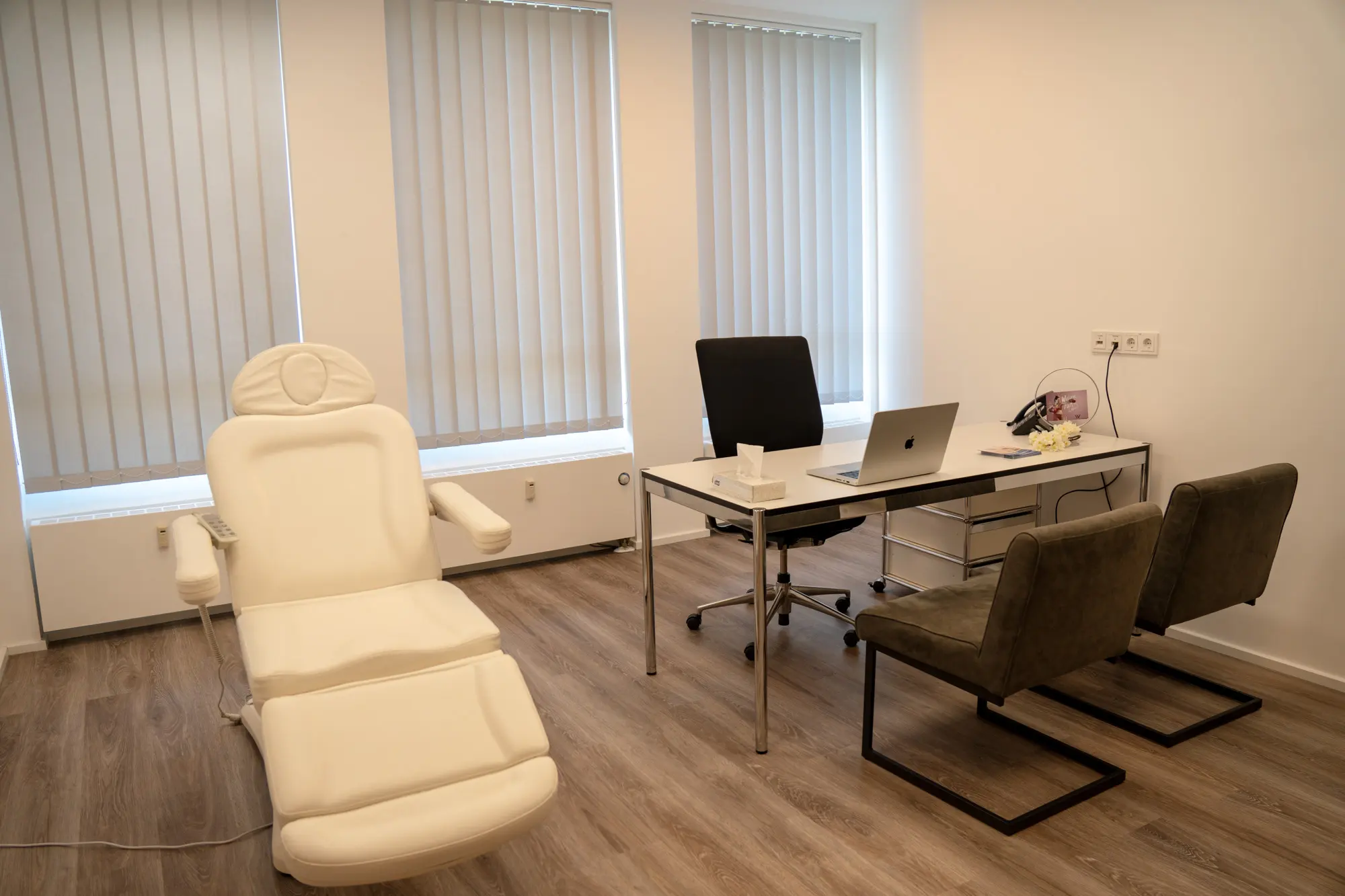
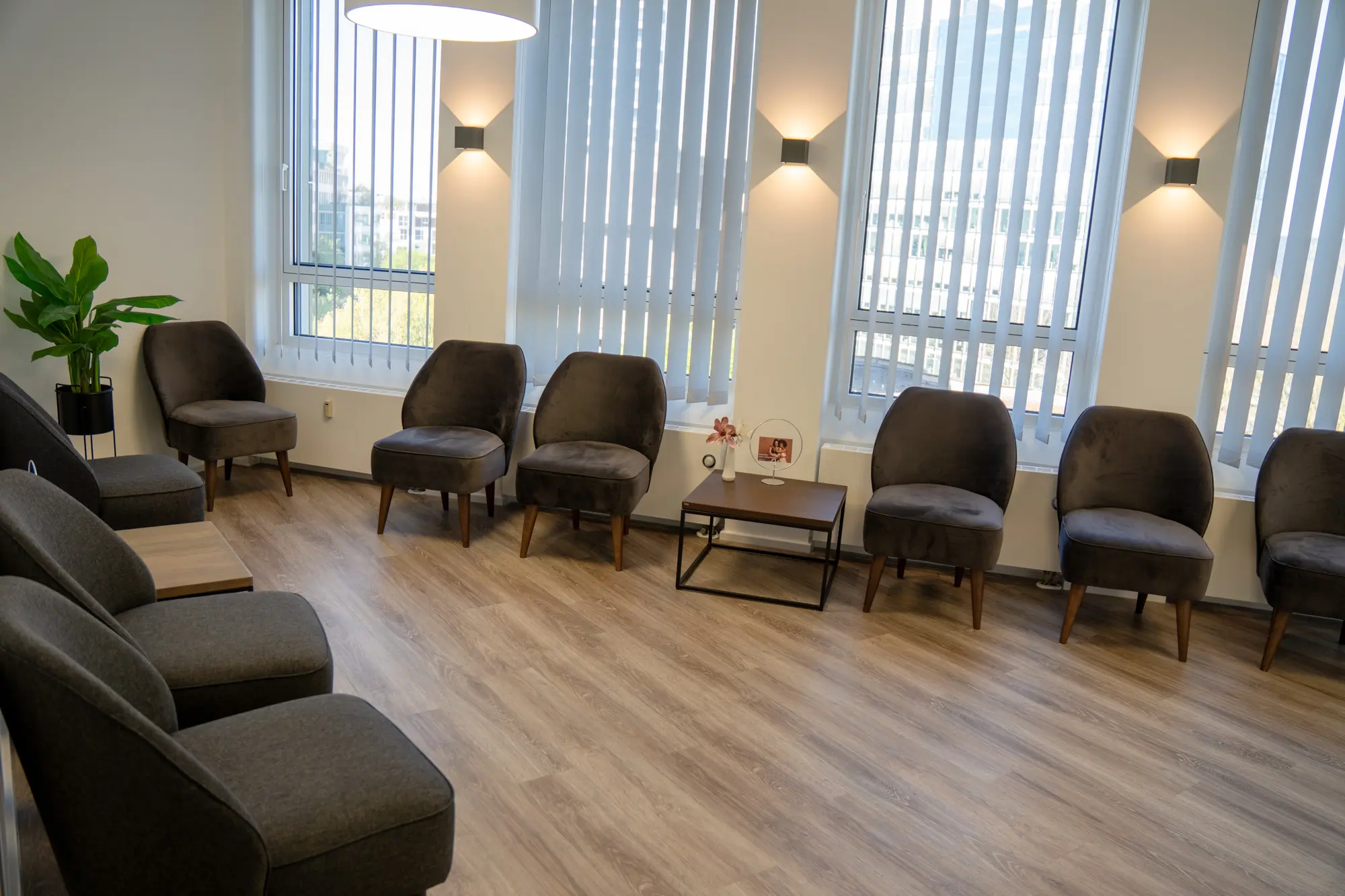
Consultation room
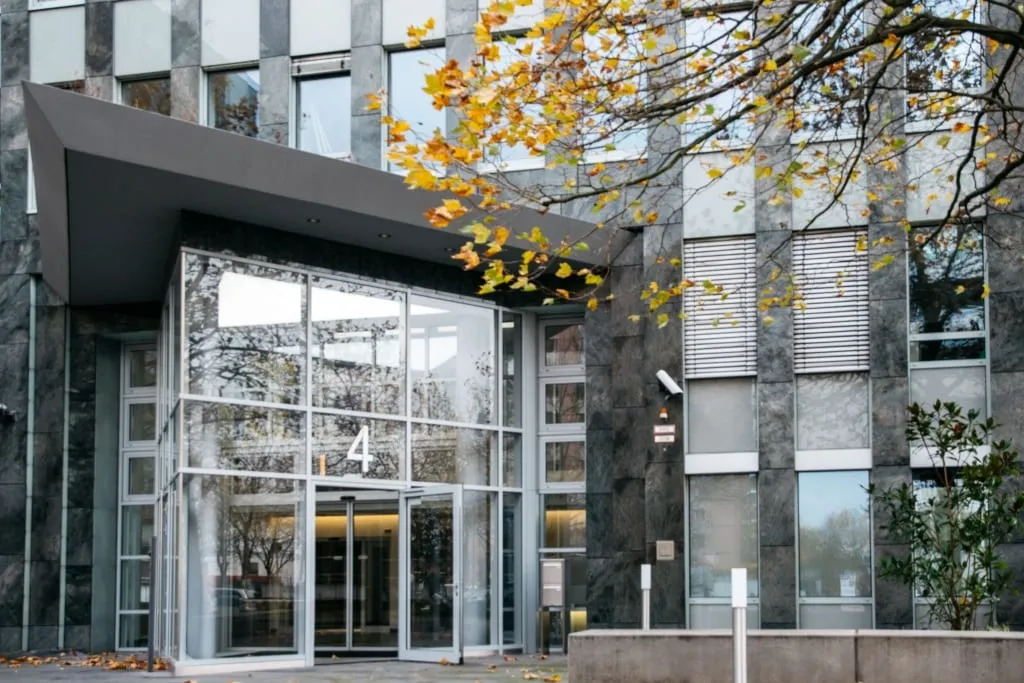
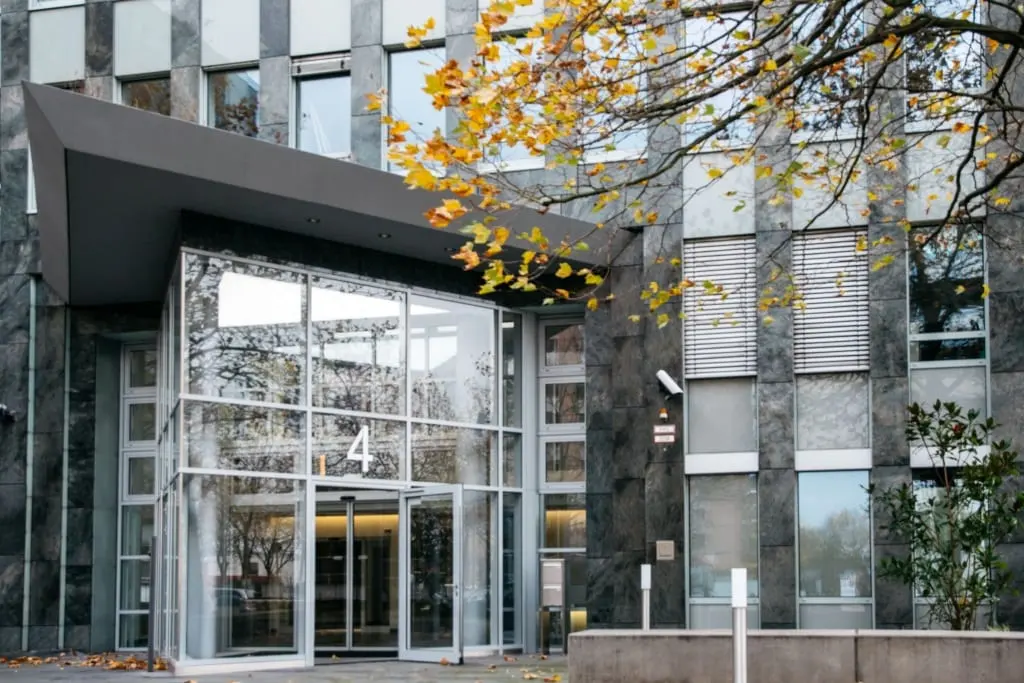
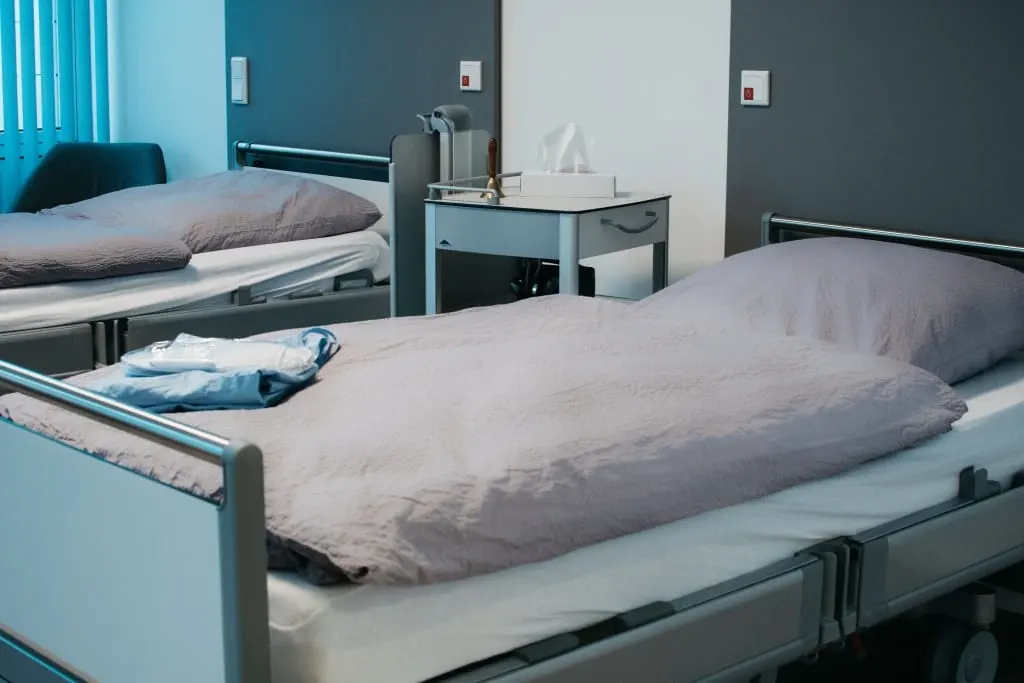
Your lipoedema treatment takes place at Klinik am Seestern in Düsseldorf, from the first consultation to aftercare. The specialist clinic for plastic and aesthetic surgery has its own operating theatres and patient rooms: you are advised and operated on in the same place where, after a larger procedure, you also spend the nights under observation and where you return for aftercare. If German statutory health insurance covers the costs, the operation usually takes place at the Nationalklinik of the Weight Doctors in Wertheim; consultation, preparation and aftercare then remain in Düsseldorf as well.
The clinic is on the left bank of the Rhine in Lörick, in the Am Seestern business district near the B7. The U77 runs directly from the main station to the Am Seestern stop, and there is free parking on the grounds. This also makes appointments after the operation easy to reach from all over Düsseldorf, from Meerbusch, Neuss and the surrounding area.
02
Common reasons for lipoedema treatment
Pain, a feeling of pressure and tension in the arms or legs
Limitations in movement and everyday activities
Changed body shape in the arms and legs
Psychological strain caused by the condition
Lipoedema is a disorder of fat distribution, mainly in the arms and legs. The burden for those affected can be considerable: besides its outward appearance, it is above all the health complaints, first and foremost pain, that make life with lipoedema harder. The cause is rising pressure in the tissue due to an increase in fat cells and water retention in the subcutaneous tissue. Liposuction is intended to reduce this pressure and relieve the complaints. How much the complaints and body shape change after the procedure varies from person to person and depends, among other things, on the stage and extent of the condition.
03
Lipoedema treatment by liposuction of the legs, arms and abdomen
Once abnormal fat tissue has formed in the subcutaneous tissue, surgical removal by liposuction can be a treatment option if conservative measures do not relieve the complaints sufficiently. Hormonal influences and genetic predisposition are most often linked with the development of lipoedema. The development is often gradual over many years, so that complaints usually only become noticeable slowly. Lipoedema can occur on the legs, arms, abdomen and other body regions. The treatment is not suitable for weight reduction. If you would like to lose weight, other treatments such as the gastric balloon or the POSE procedure may be an option.
04
The typical 3 stages of lipoedema
The progression and manifestation of lipoedema are described in 3 stages:
Lipoedema
Stage 1
In the first stage, a tendency towards so-called saddlebags begins to show. The skin surface is usually still even and smooth. The subcutaneous tissue is thickened in places but still feels soft overall. Small, nodule-like structures can often be felt at the knee and on the inner thighs.
Lipoedema
Stage 2
In the second stage, the saddlebags are more pronounced. The skin surface shows larger dimples and lumps, which can reach the size of a walnut, but also that of a mandarin or an apple. The subcutaneous tissue is markedly and extensively thickened; the skin is still soft.
Lipoedema
Stage 3
In the third stage, the legs have increased noticeably in circumference. The subcutaneous tissue is so thickened that the skin feels firm and hardened. On the inner sides of the thighs, coarse, in part deforming flaps of fat form (formation of overhanging folds), which in pronounced cases can extend down to the ankles.
Diagram in cross-section:SkinFatty tissueLumpsSmall nodulesMuscle
Physical impairments can be added as this develops, for example sore patches of skin from friction at the knees and inner thighs. The high load on the joints can lead to malalignment of the legs (knock knees). Inflammations such as erysipelas can also occur; they are painful and can be accompanied by fever and general weakness.
We assess the extent and stage of your lipoedema during the examination in the consultation at Klinik am Seestern in Düsseldorf.
Aims of lipoedema surgery
Removal of abnormally increased subcutaneous fat tissue
Relief of pain and of the feeling of pressure and tension
Improvement of mobility and everyday function
Balancing the proportions of the arms and legs
If you would like to find out about lipoedema treatment by liposuction, you can request information or arrange an appointment for a no-obligation consultation.
05
Lipoedema surgery at Klinik am Seestern, clearly explained
In principle, removing lipoedema is similar to the procedure of liposuction. First, the areas to be treated are marked, usually on the arms and/or legs, sometimes also on the hips, abdomen or shoulder area. The treatment is usually carried out under general anaesthesia. At the start, a tumescent solution is introduced into the treatment areas, and the abnormal fat tissue is then suctioned out of the subcutaneous fat tissue. At Klinik am Seestern we use a vibration-assisted technique that is intended to make the suction easier and to spare the surrounding tissue. After the procedure you usually stay in the clinic for 1 to 2 nights for observation. After smaller procedures you can go home the same day. To support healing, you wear a compression girdle for at least 6 weeks.
Procedure
Liposuction for lipoedema in three steps
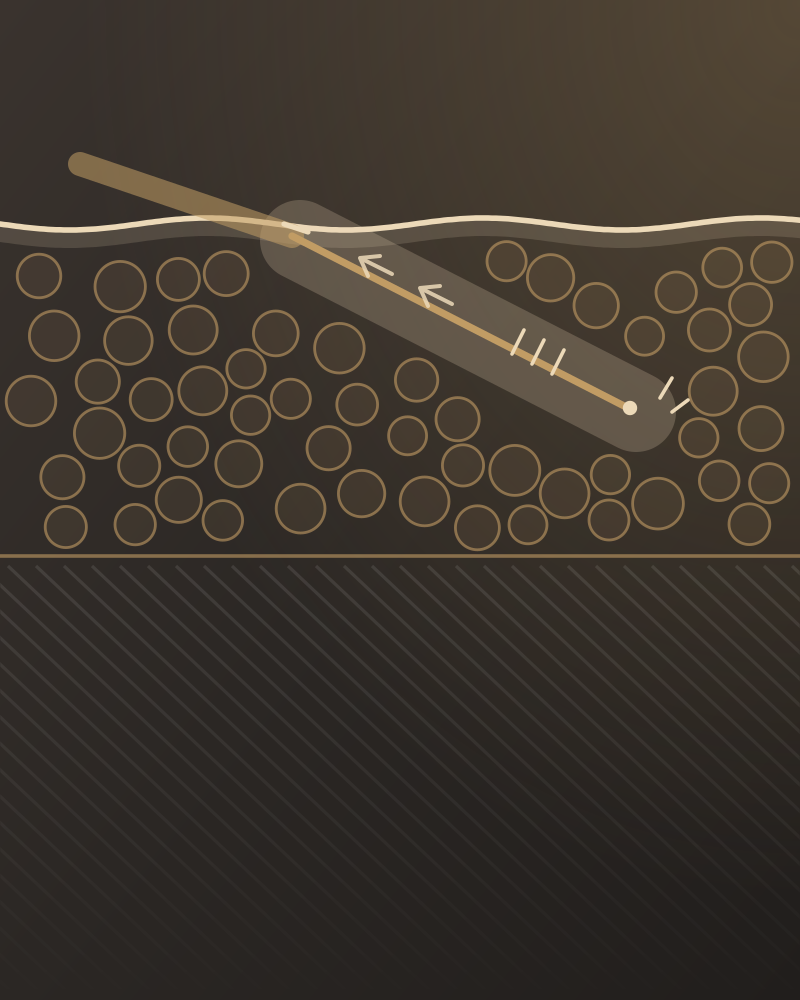
What happens in the tissue during and after the operation, shown schematically in cross-section through skin, fat and muscle.
01Tumescenceat the start
Once the areas have been marked, a tumescent solution is introduced into the fat tissue. It spreads through the tissue and prepares it for the suction.
Anaesthesia
usually general anaesthesia, sometimes local
Access
small punctures
02Suctionvibration-assisted
The abnormal fat tissue is suctioned out through the small punctures. The cannula of the vibration-assisted technique moves back and forth in fine movements as it does so, which is intended to spare the tissue all around.
Duration of surgery
about 2 to 5 hours
Scars
about 4 to 5 mm
03Compressionafterwards
After the procedure you wear compression garments, day and night. Their even pressure is intended to prevent dimples and unevenness and to counteract fluid in the tissue.
Duration
about 6 to 8 weeks
Stay in the clinic
outpatient or 1 to 2 nights
06
How much fat can be removed in lipoedema treatment?
The amount of fat tissue suctioned out depends on the extent of the treatment and the number of body regions affected. With a smaller treatment on the arms, it can be a few hundred millilitres. With an advanced lipoedema affecting several body regions, the amount can be several litres. In that case it may be necessary, for safety reasons, to divide the treatment into several sessions. We will discuss with you in the first consultation how much fat tissue should be removed in your case.
In some cases, tightening of the skin may become necessary after liposuction. Your treating doctor will inform you whether this is an option in your case.
07
What does lipoedema surgery cost in Düsseldorf? Costs and financing
The costs of lipoedema treatment by liposuction depend on the extent and the number of procedures. The further the lipoedema has progressed and the more complex the treatment becomes, the higher the costs, for example when the arms, abdomen and legs are affected. In other cases there is no lipoedema, and a simpler outpatient liposuction or, for localised findings, a tummy tuck, thigh lift or upper arm lift may be an option. After the first consultation we will draw up an individual treatment quote for you. Financing is possible through our financing partner; you can find out more under Financing your treatment. Since October 2025, German statutory health insurance can cover liposuction for lipoedema in all stages if the requirements are met; the operation then usually takes place at the Nationalklinik of the Weight Doctors in Wertheim. You can read what this involves under Lipoedema surgery as a statutory health insurance patient in Düsseldorf.
08
How lipoedema develops
Lipoedema is understood to mean an abnormal increase of fat tissue in the subcutaneous layer, usually combined with more or less pronounced water retention. Lipoedema usually appears only from puberty onwards and mainly affects women. Most patients are between 20 and 35 years old. The causes have still not been fully clarified. The following connections are being discussed:
01
Hormonal changes
Phases of life with hormonal changes, such as pregnancies and the menopause, but also gynaecological procedures such as the removal of the ovaries or the uterus, alter the hormone balance and can intensify an existing lipoedema.
A special role is attributed to the female hormone oestrogen, because fat cells react particularly strongly to it via certain receptors on their surface. In the few men affected, too, lipoedema is attributed to hormonal changes, for instance in connection with liver disease or hormone therapy.
02
Stressful life events and lifestyle
Severe emotional stress is also mentioned in connection with lipoedema, for example a separation, a misfortune in the family or a shock caused by an accident or illness.
Lack of exercise and an unhealthy diet are also discussed as possible aggravating factors. Body weight has only a limited influence: both slim and overweight people can develop lipoedema.
03
Hereditary predisposition
Lipoedema often occurs in several generations of a family. It is suspected that genes that control the structure of the blood vessels play a role.
04
Changes in the vessels in the subcutaneous tissue
A malfunction of small blood vessels in the subcutaneous tissue, for example in the course of an inflammation, is also named as a cause. The vessels become more permeable, and fluid leaks into the subcutaneous tissue. This fits with the fact that people with lipoedema bruise much more easily.
09
Lipoedema guide from Klinik am Seestern in Düsseldorf
You will find everything else about lipoedema, from the first signs to the time after the operation, on these pages.
Why is a personal consultation so important before lipoedema treatment?
Many patients with lipoedema have already tried various treatment approaches before they come to us. That is why, in the first consultation, we talk in detail about your medical history so far and your previous treatments. We measure your body and, if necessary, carry out further physical examinations in order to assess the extent and stage of the lipoedema and to determine the amount of work involved in a possible procedure. You learn in the initial conversation what possibilities and limits the treatment has and what medical risks exist. The examination also includes the question of whether there is a so-called lipolymphoedema, that is, lipoedema with additional water retention. In this case, a separate treatment is necessary, where appropriate in coordination with doctors from other specialities, before the abnormal fat tissue can be removed.
What happens after the consultation on lipoedema treatment?
Give yourself enough time to think it over, and weigh up the information from the consultation carefully. You can also contact Klinik am Seestern with questions after the consultation. If you have decided on treatment by liposuction, we will plan the appointment and the preparation together with you.
What is the procedure for lipoedema treatment?
On the day of treatment we welcome you at Klinik am Seestern in the morning. After admission, there is a final conversation with your treating doctor. The procedure is usually carried out under general anaesthesia, sometimes under local anaesthesia. Depending on the extent, you can leave the clinic again on the same day. After larger procedures you stay with us as an inpatient for 1 to 2 nights for your safety.
Does lipoedema treatment leave scars?
Small scars of about 4 to 5 mm form where the cannulas are inserted and, as a rule, fade over time. Larger incisions are not required for the suction. How scars develop varies from person to person.
How long does healing take and why do I have to wear compression garments?
Healing begins during your stay at Klinik am Seestern. At home, you should take it easy at first and not go straight back to work. Wear compression garments, day and night, for about 6 to 8 weeks. They are intended to prevent dimples and unevenness of the skin surface and to counteract accumulations of water or lymph in the tissue. With compression garments, a return to everyday life and to work is possible in many cases after about 2 weeks.
What does lipoedema surgery cost in Düsseldorf?
The costs depend on the extent of the treatment and the number of procedures, that is, on how far the lipoedema has progressed and which body regions are affected. After your consultation at Klinik am Seestern you will receive an individual treatment quote. Financing is possible through our financing partner.
Where in Düsseldorf does the lipoedema surgery take place?
Consultation, operation and aftercare take place at the Klinik am Seestern, Am Seestern 4 in 40547 Düsseldorf-Lörick. The clinic is on the left bank of the Rhine near the B7, the U77 runs directly from the main station to the Am Seestern stop, and there is free parking on the grounds.
Costs and financing
Pay conveniently in instalments.
You can pay for your treatment in monthly instalments through our financing partner medipay, with terms of up to 72 months. We will tell you the price of your procedure after the consultation.
I am a lipoedema and lymphoedema patient and have been trying to find help for about 10 years. Here it was no problem at all! I was called in quickly, was well looked after, my questions were answered very professionally, and I was able to leave the practice in tears of joy! Many thanks for the support so far.
Alina · October 2026
The friendliness of everyone I dealt with.
Anonymous · July 2026
I had my appointment at the practice for a consultation about my lipoedema, and I really want to leave a review even though I haven't had any surgery there yet. The reason is that this was the first time I felt truly taken seriously during an examination of my lipoedema. Dr. Witt was very friendly and professional from the start, and at the same time incredibly pleasant and humane. He took an exceptional amount of time, examined me very thoroughly and answered all my questions in detail. He is incredibly respectful and explains realistically what could be done and how the whole process would work. I found it particularly positive that at no point did a hectic or unpleasant mood arise. You never had the feeling of being “brushed off” or being under time pressure. Instead, the whole atmosphere was calm, relaxed and trusting. Dr. Witt was very committed, photos were taken of the affected areas and every possible treatment was explained in an understandable way. Dr. Witt explained everything in detail, yet never came across as complicated or distant. Although he is an absolute specialist in his field, I felt at all times that I could speak openly and ask any question. It felt more as if I had been a patient there for a long time. It was also particularly important to me that I never felt pushed towards an operation. It is still not at all clear whether I will have my operation at all, and yet I was taken incredibly seriously and treated with respect. That is exactly what built so much trust in me. I would also very much like to mention the lady at reception, Marris, in a positive way. She was super polite, had a very pleasant and calm manner and immediately gave me a good feeling. Although it was almost 5 p.m. and the end of the working day was approaching, she was incredibly friendly to me and did not seem at all annoyed or stressed. It is precisely such little things that make a huge difference to me personally and reinforced my positive overall impression of the practice. The practice itself is also absolutely impressive. It is extremely modern, high-quality and stylishly furnished. You feel more as if you are entering a luxury hotel than a traditional doctor's practice. Everything seems very well thought out, calm and professional. The organisation around the appointment was also excellent. Even before the appointment, communication was always very friendly, quick and professional. Questions were answered immediately and the whole process seemed perfectly organised. I was also allowed to park in the clinic's car park, which was an enormous relief since everything in the area was completely full. Although it was already later in the afternoon, Dr. Witt even personally saw to it that enquiries were made internally about my question regarding costs. Shortly after I had left the practice, I already received all the information by email. That too simply shows how professionally and attentively they work there. Overall, an exceptionally positive experience, of a kind you unfortunately only rarely have in the medical field. Absolutely fabulous.
Kerasoula P. · June 2026
Very beautiful clinic, wonderful reception and great service. The consultation with the doctor was very comprehensive and she addressed all my questions, which is all you could wish for as a patient / customer. I will definitely have my treatment done here.
Sandra W. · April 2026
Dr. Bromba took the time and advised me very well.
Anonymous · April 2026
A very kind doctor. I felt very comfortable from the first moment!
Elisabeth-katrin · March 2026
Everything was great, just one small remark..... I didn't get any dinner/bread in the evening. The most important thing for me was the operation, or rather everything around it.
Mix · February 2026
I was welcomed and advised incredibly kindly. The consultation takes place on an equal footing and without medical jargon, and what I like best is that they paid attention to what the best treatment is for my concern, and not to what would earn the practice the most money. I took a week to think it over, but actually the decision to choose the clinic was made much sooner.
Anonymous · January 2026
Everyone was very friendly, especially the nurses.
Anonymous · October 2025
I had a consultation and felt taken seriously and understood. They took a lot of time for me, and the examination and the conversation were very thorough. In the end, the treatment is too expensive for me, so I won't be able to have it done.
Anonymous · October 2025
Very competent and friendly consultation.
Anonymous · October 2025
Very competent consultation, super friendly staff!
Anonymous · September 2025
Medical assistant with partly insufficient professional competence.
Andreas M. · August 2025
Very competent consultation and medical examinations. I feel very well looked after.
BrigitteM · August 2025
I really liked the super friendly manner of the ladies at reception, and also that the doctor took the time to see and advise me, as well as the nice lady who went through the cost plan with me. I felt wonderfully looked after and will definitely have my treatment there. Thank you once again for everything so far.
Astrid R. · August 2025
A conversation in peace and without time pressure. I felt very well looked after.
Anonymous · August 2025
I was welcomed very nicely. The doctor was also very nice and answered all my questions. She also showed understanding that one does not decide straight away.
Anonymous · July 2025
Dr. Bromba's calm, matter-of-fact manner and his competence really convinced me during the consultation.