Lipoedema or lymphoedema? Examination in Düsseldorf
Sturdy, painful legs can have many causes. How lipoedema, lymphoedema, cellulite and excess weight differ, where they overlap and how we carry out the examination at Klinik am Seestern in Düsseldorf.
increased fat on the legs or arms, on both sides, painful on pressure
Lymphoedema
fluid that has backed up, often one-sided, feet or hands swollen
Cellulite
dimples in the skin surface, no pain
Overweight
fat all over the body, also on the abdomen and trunk
Mixed forms
lipolymphoedema, lipoedema with excess weight
Diagnosis
Conversation, examination and palpation
Ultrasound
rules out other causes, does not prove lipoedema
Examination
at the Klinik am Seestern, Düsseldorf-Lörick
Symmetry and slim feet: lipoedema affects both sides equally and ends at the wrists and ankles.
Pain as a clue: pain on pressure points towards lipoedema; cellulite and excess weight do not hurt.
Mixed forms are common: that is why the distinction belongs in medical hands.
01
Getting your legs checked in Düsseldorf: examination at Klinik am Seestern
“I just have sturdy legs” – many women with lipoedema hear this sentence for years, often from themselves as well. Yet behind painful, heavy legs there is sometimes a condition that needs its own treatment. Lipoedema, lymphoedema, cellulite and excess weight look similar at first glance but differ in important ways. At Klinik am Seestern in Düsseldorf, we take the time to clarify these differences with you.
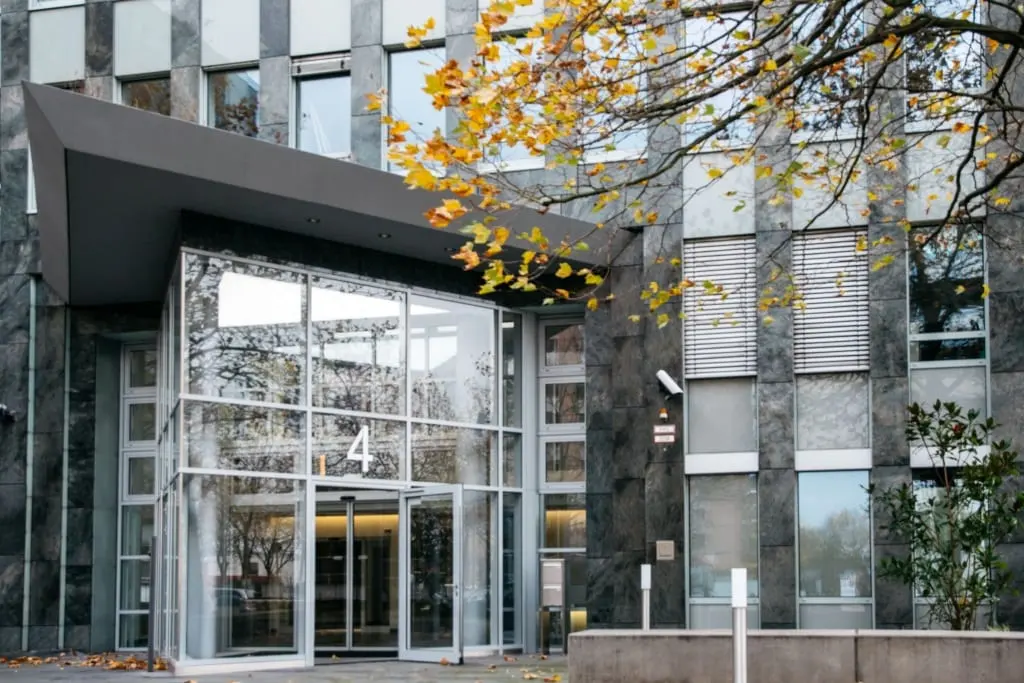
The clinic is in Lörick, on the left bank of the Rhine, in the Am Seestern office district, not far from the B7. The U77 connects the main station with the Am Seestern stop without a change, and free parking is available on the site. That is how you reach us from Düsseldorf, Meerbusch and Neuss.
02
Four possible causes of sturdy legs
01
Lipoedema
The subcutaneous fatty tissue on the legs, hips or arms is pathologically increased, equally on both sides. Typical are pain on pressure and touch, a feeling of heaviness and tension, and a marked disproportion between a slim upper body and sturdy legs. Hands and feet stay slim.
02
Lymphoedema
In lymphoedema, fluid backs up in the tissue because lymph drainage is disrupted. It often starts on one side and also involves the feet or hands. If the swelling is pressed, a dent can remain.
03
Cellulite
Cellulite means dimples in the skin surface that arise from the structure of the connective tissue. It is very common, does not hurt and is not a disease.
04
Overweight
With excess weight, the fat is distributed over the whole body, including the abdomen and trunk. Pain on pressure is not part of it, and people who lose weight usually lose it everywhere.
03
The signs compared
One side or both?
Lipoedema always affects both sides of the body equally. Lymphoedema often starts in one leg or one arm.
Hands and feet
In lipoedema, the increase in fat often ends as if cut off at the wrists and ankles. In lymphoedema, the feet or hands often swell too.
Pain on pressure
In lipoedema, pressure and touch often hurt out of proportion. Cellulite and excess weight do not cause such pain.
Abdomen and trunk
In lipoedema, the trunk usually stays slimmer than the legs and arms. With excess weight, the abdomen also gets bigger.
If you lose weight
In lipoedema, a diet mainly changes the upper body; the legs and arms stay sturdy. With excess weight, the proportions change overall.
Dents after pressure
If a dent remains in the swelling after pressing with a finger, this points more towards deposited fluid, as in lymphoedema.
04
The pinch test and toes: what doctors check
Whether lipoedema is present is determined by the medical examination. This includes the conversation about your symptoms and your medical history, a look at shape and proportions, and palpation of the tissue. In the so-called pinch test, the doctor carefully takes the tissue between their fingers. In lipoedema, this is often clearly painful.
Another clue that doctors check is the skin over the toes: if it cannot be lifted into a fold on the back of the second toe, this can point to lymphoedema. Ultrasound can rule out vein disease and other causes, but it cannot prove lipoedema. None of these signs is enough on its own; only the overall picture gives the diagnosis.
05
Mixed forms: lipolymphoedema and lipoedema with excess weight
The four causes are not mutually exclusive. If lymphoedema is added to lipoedema, it is called lipolymphoedema. The lymphoedema then needs its own treatment, if necessary in coordination with doctors from other specialties, before diseased fatty tissue can be removed.
Lipoedema and excess weight also often occur together. This plays a role in treatment: weight gain can make the symptoms worse, and BMI limits apply to liposuction as a service covered by German statutory health insurance. If you would like to lose weight first, we also advise you in Düsseldorf on weight loss with medical support.
06
When you should have your legs checked by a doctor
Not every change in the legs or arms is a cause for concern. However, you should have these signs checked by a doctor:
Pain on pressure or touch in the legs or arms
A swelling that affects only one side
Feet or hands that swell too
Legs that stay clearly sturdier than the upper body despite weight loss
A feeling of heaviness and tension that increases over the course of the day
If, on the other hand, a leg suddenly swells up painfully, do not wait for a consultation appointment: go to a doctor or to the emergency department immediately, because a thrombosis, for example, can be behind it.
For the assessment of lipoedema, you are in the right place at Klinik am Seestern in Düsseldorf. Depending on the findings, we will also tell you which specialty can help if lymphoedema or vein problems are suspected.
07
Why the right distinction matters
Each of the four causes needs a different treatment
A lymphoedema is treated separately before liposuction
For German statutory health insurance cover, a confirmed lipoedema diagnosis is needed
Cellulite is not a disease and not a cause for concern
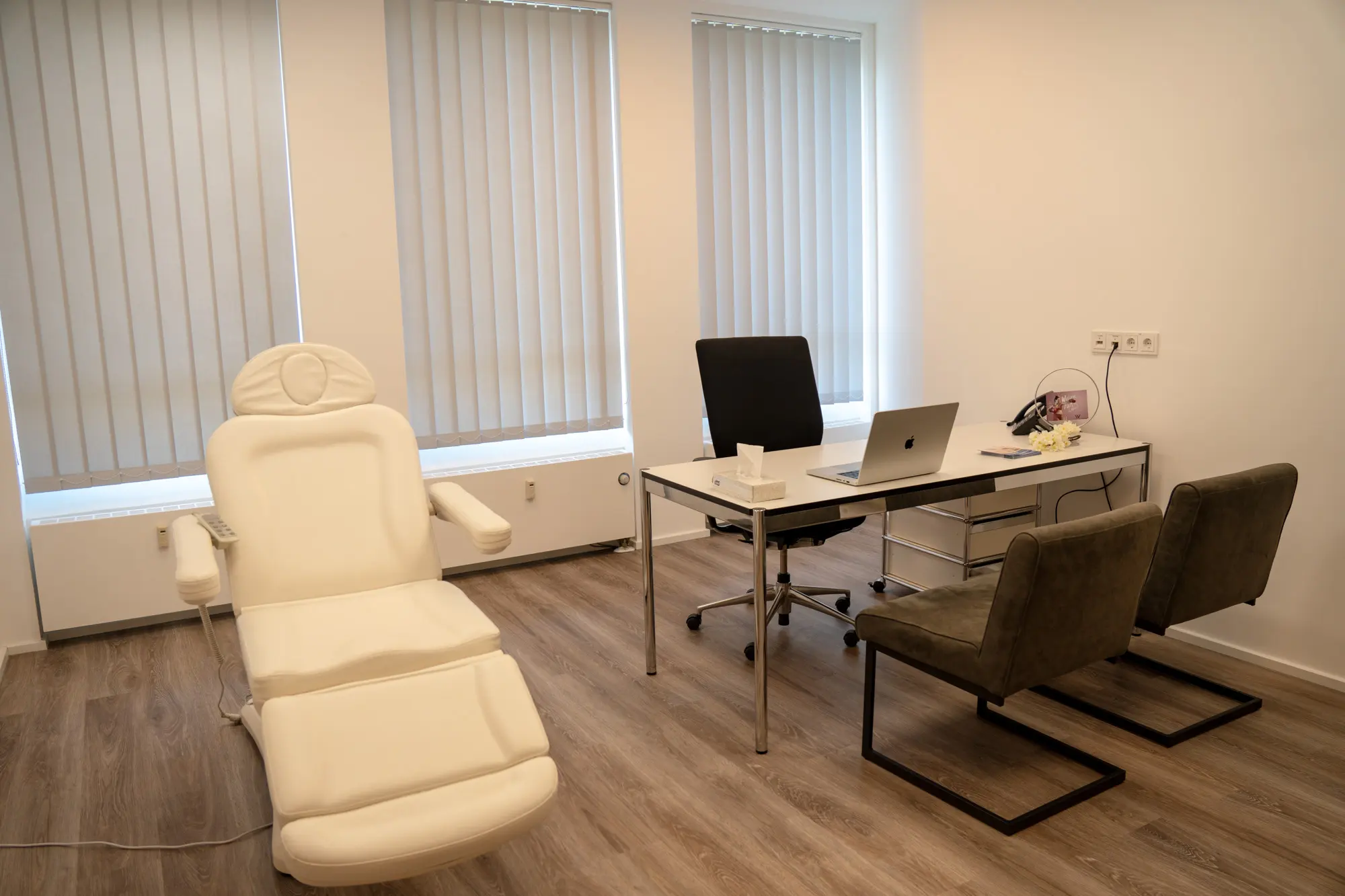
In the consultation, we talk about your symptoms and previous treatments, examine and measure your legs and arms, and check whether lipoedema, lymphoedema or a mixed form is present. Afterwards you will know which path is an option for you, whether without an operation or with lipoedema surgery. You book your appointment in Düsseldorf online, as a patient with German statutory health insurance, as a self-pay patient or still undecided.
How can I tell whether I have lipoedema or cellulite?
Cellulite shows as dimples in the skin; it does not hurt and is not a disease. In lipoedema, the subcutaneous fatty tissue on the legs or arms is pathologically increased, it hurts on pressure and touch, and the legs or arms are clearly sturdier than the upper body. Both can occur at the same time.
How can I recognise lymphoedema?
In lymphoedema, fluid backs up in the tissue. It often starts on one side and also involves the feet or hands. If the swelling is pressed, a dent can remain. Whether lymphoedema is present is determined by the medical examination.
Can you have lipoedema and lymphoedema at the same time?
Yes. If lymphoedema is added to lipoedema, it is called lipolymphoedema. The lymphoedema then needs its own treatment before diseased fatty tissue can be removed.
Are thick legs always lipoedema?
No. Sturdy legs can be a matter of natural predisposition, result from excess weight, or be due to lymphoedema or vein problems. Typical of lipoedema are pain on pressure, a disproportion between the upper body and legs, and slim feet.
Does losing weight help with lipoedema?
Losing weight mainly changes the upper body; in lipoedema, the legs and arms often change little. Paying attention to a stable weight is still worthwhile, because people who gain weight can develop stronger symptoms. If there is also excess weight, losing weight can ease the symptoms.
What is the pinch test in lipoedema?
During the examination, the doctor carefully takes the tissue between their fingers. In lipoedema, this is often painful out of proportion. The test is one clue among several and does not replace an examination.
Can an ultrasound detect lipoedema?
No. Ultrasound can rule out other causes such as vein disease. Lipoedema is diagnosed on the basis of medical history, symptoms and physical examination.
Can lipoedema be operated on in the presence of excess weight?
That depends on the findings. As a service covered by German statutory health insurance, liposuction is possible up to a BMI of 35, and between 32 and 35 only with a suitable waist-to-height ratio. At a higher BMI, treatment of the excess weight comes first. Our WHtR calculator shows you your own value.
Where in Düsseldorf can I have my legs examined?
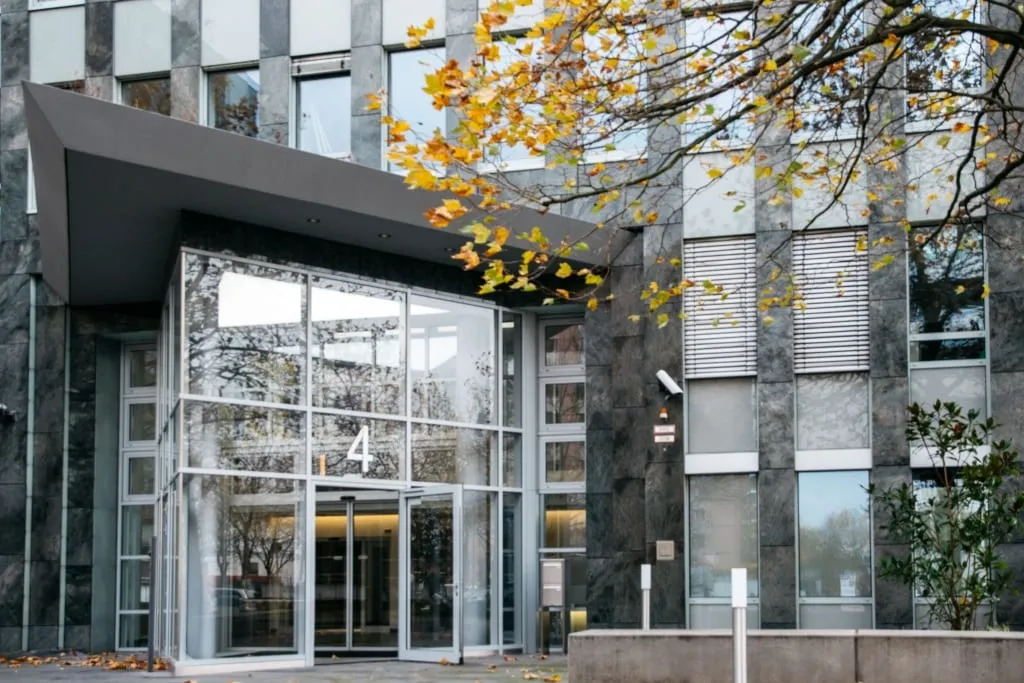
At the Klinik am Seestern, Am Seestern 4 in 40547 Düsseldorf-Lörick. The clinic is on the left bank of the Rhine near the B7, the U77 runs directly from the main station to the Am Seestern stop, and there is free parking on the grounds.
Book consultation
Your appointment in Düsseldorf.
Your treatmentLipoedema, lymphoedema or cellulite?
I am a lipoedema and lymphoedema patient and have been trying to find help for about 10 years. Here it was no problem at all! I was called in quickly, was well looked after, my questions were answered very professionally, and I was able to leave the practice in tears of joy! Many thanks for the support so far.
Alina · October 2026
The friendliness of everyone I dealt with.
Anonymous · July 2026
I had my appointment at the practice for a consultation about my lipoedema, and I really want to leave a review even though I haven't had any surgery there yet. The reason is that this was the first time I felt truly taken seriously during an examination of my lipoedema. Dr. Witt was very friendly and professional from the start, and at the same time incredibly pleasant and humane. He took an exceptional amount of time, examined me very thoroughly and answered all my questions in detail. He is incredibly respectful and explains realistically what could be done and how the whole process would work. I found it particularly positive that at no point did a hectic or unpleasant mood arise. You never had the feeling of being “brushed off” or being under time pressure. Instead, the whole atmosphere was calm, relaxed and trusting. Dr. Witt was very committed, photos were taken of the affected areas and every possible treatment was explained in an understandable way. Dr. Witt explained everything in detail, yet never came across as complicated or distant. Although he is an absolute specialist in his field, I felt at all times that I could speak openly and ask any question. It felt more as if I had been a patient there for a long time. It was also particularly important to me that I never felt pushed towards an operation. It is still not at all clear whether I will have my operation at all, and yet I was taken incredibly seriously and treated with respect. That is exactly what built so much trust in me. I would also very much like to mention the lady at reception, Marris, in a positive way. She was super polite, had a very pleasant and calm manner and immediately gave me a good feeling. Although it was almost 5 p.m. and the end of the working day was approaching, she was incredibly friendly to me and did not seem at all annoyed or stressed. It is precisely such little things that make a huge difference to me personally and reinforced my positive overall impression of the practice. The practice itself is also absolutely impressive. It is extremely modern, high-quality and stylishly furnished. You feel more as if you are entering a luxury hotel than a traditional doctor's practice. Everything seems very well thought out, calm and professional. The organisation around the appointment was also excellent. Even before the appointment, communication was always very friendly, quick and professional. Questions were answered immediately and the whole process seemed perfectly organised. I was also allowed to park in the clinic's car park, which was an enormous relief since everything in the area was completely full. Although it was already later in the afternoon, Dr. Witt even personally saw to it that enquiries were made internally about my question regarding costs. Shortly after I had left the practice, I already received all the information by email. That too simply shows how professionally and attentively they work there. Overall, an exceptionally positive experience, of a kind you unfortunately only rarely have in the medical field. Absolutely fabulous.
Kerasoula P. · June 2026
Very beautiful clinic, wonderful reception and great service. The consultation with the doctor was very comprehensive and she addressed all my questions, which is all you could wish for as a patient / customer. I will definitely have my treatment done here.
Sandra W. · April 2026
Dr. Bromba took the time and advised me very well.
Anonymous · April 2026
A very kind doctor. I felt very comfortable from the first moment!
Elisabeth-katrin · March 2026
Everything was great, just one small remark..... I didn't get any dinner/bread in the evening. The most important thing for me was the operation, or rather everything around it.
Mix · February 2026
I was welcomed and advised incredibly kindly. The consultation takes place on an equal footing and without medical jargon, and what I like best is that they paid attention to what the best treatment is for my concern, and not to what would earn the practice the most money. I took a week to think it over, but actually the decision to choose the clinic was made much sooner.
Anonymous · January 2026
Everyone was very friendly, especially the nurses.
Anonymous · October 2025
I had a consultation and felt taken seriously and understood. They took a lot of time for me, and the examination and the conversation were very thorough. In the end, the treatment is too expensive for me, so I won't be able to have it done.
Anonymous · October 2025
Very competent and friendly consultation.
Anonymous · October 2025
Very competent consultation, super friendly staff!
Anonymous · September 2025
Medical assistant with partly insufficient professional competence.
Andreas M. · August 2025
Very competent consultation and medical examinations. I feel very well looked after.
BrigitteM · August 2025
I really liked the super friendly manner of the ladies at reception, and also that the doctor took the time to see and advise me, as well as the nice lady who went through the cost plan with me. I felt wonderfully looked after and will definitely have my treatment there. Thank you once again for everything so far.
Astrid R. · August 2025
A conversation in peace and without time pressure. I felt very well looked after.
Anonymous · August 2025
I was welcomed very nicely. The doctor was also very nice and answered all my questions. She also showed understanding that one does not decide straight away.
Anonymous · July 2025
Dr. Bromba's calm, matter-of-fact manner and his competence really convinced me during the consultation.