Spider veins are small, visible veins on the legs. They are usually harmless but can point to a weakness of the veins. We examine your veins at Klinik am Seestern in Düsseldorf and advise you on the treatment options.
Spider vein treatment in Düsseldorf: examination and treatment in one place
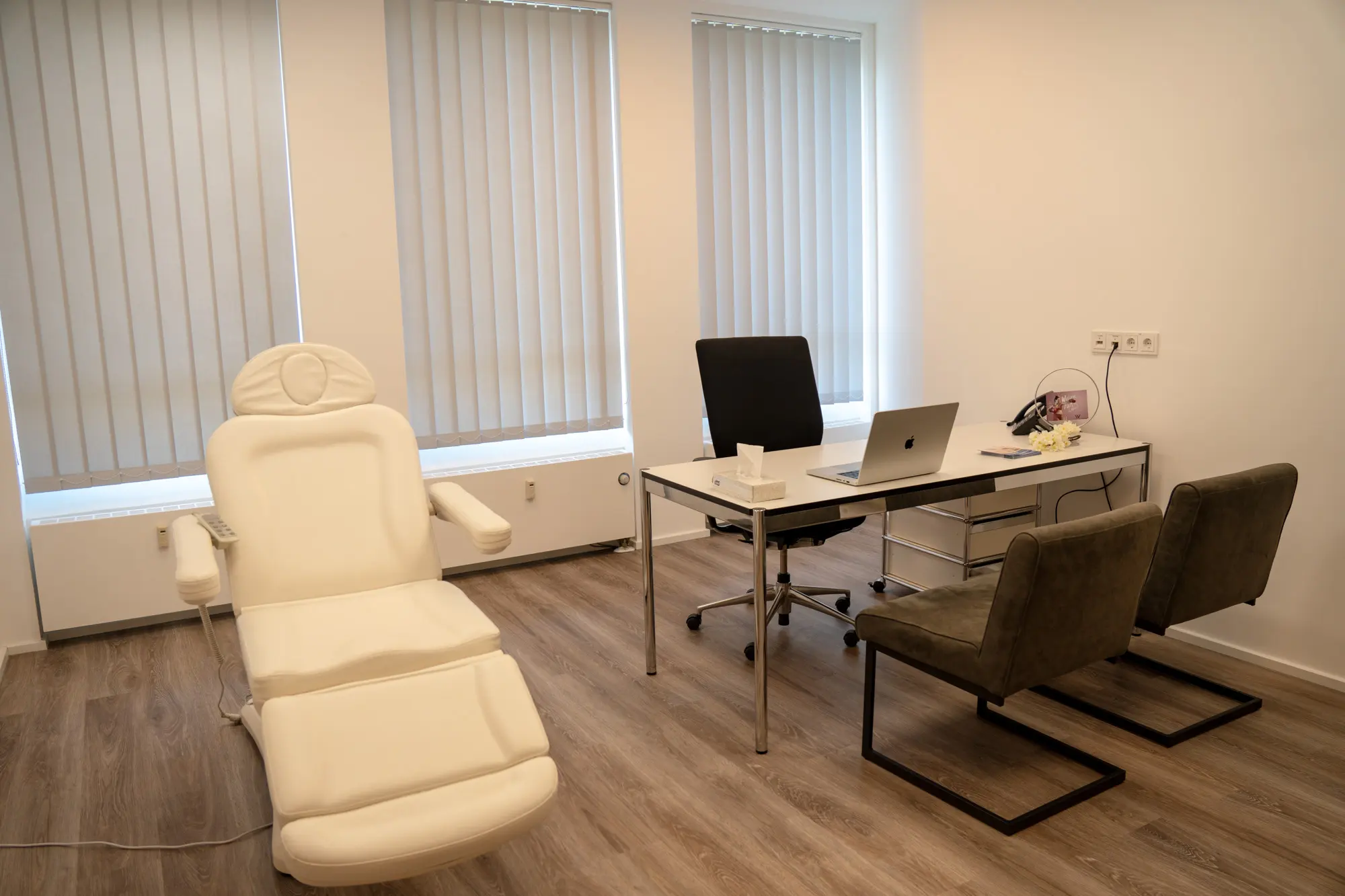
The consultation, vein examination and treatment take place at Klinik am Seestern in Düsseldorf. Before sclerotherapy we examine how the blood flows in your veins and what condition the vein valves are in. The treatment itself takes about 20 to 30 minutes, usually manages without anaesthesia and is outpatient: you go home afterwards and can move around freely.
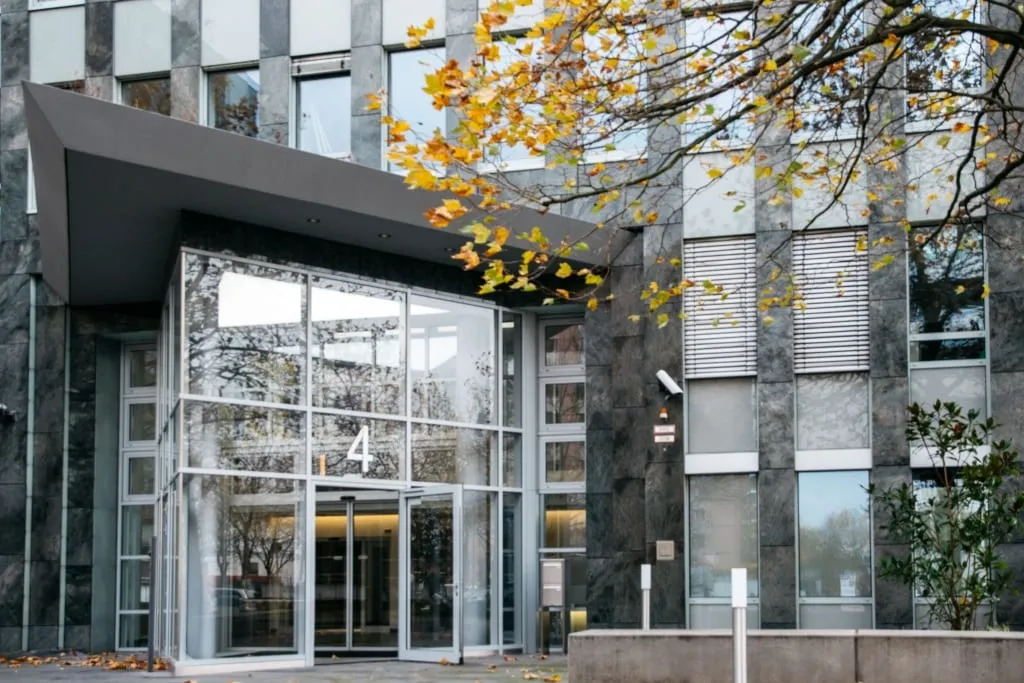
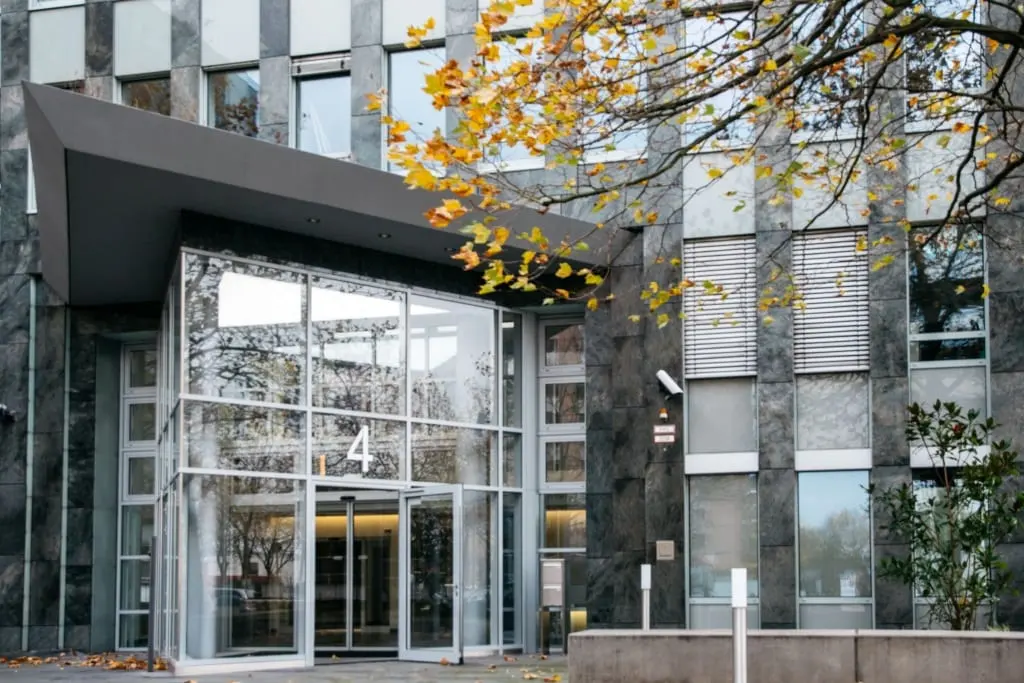
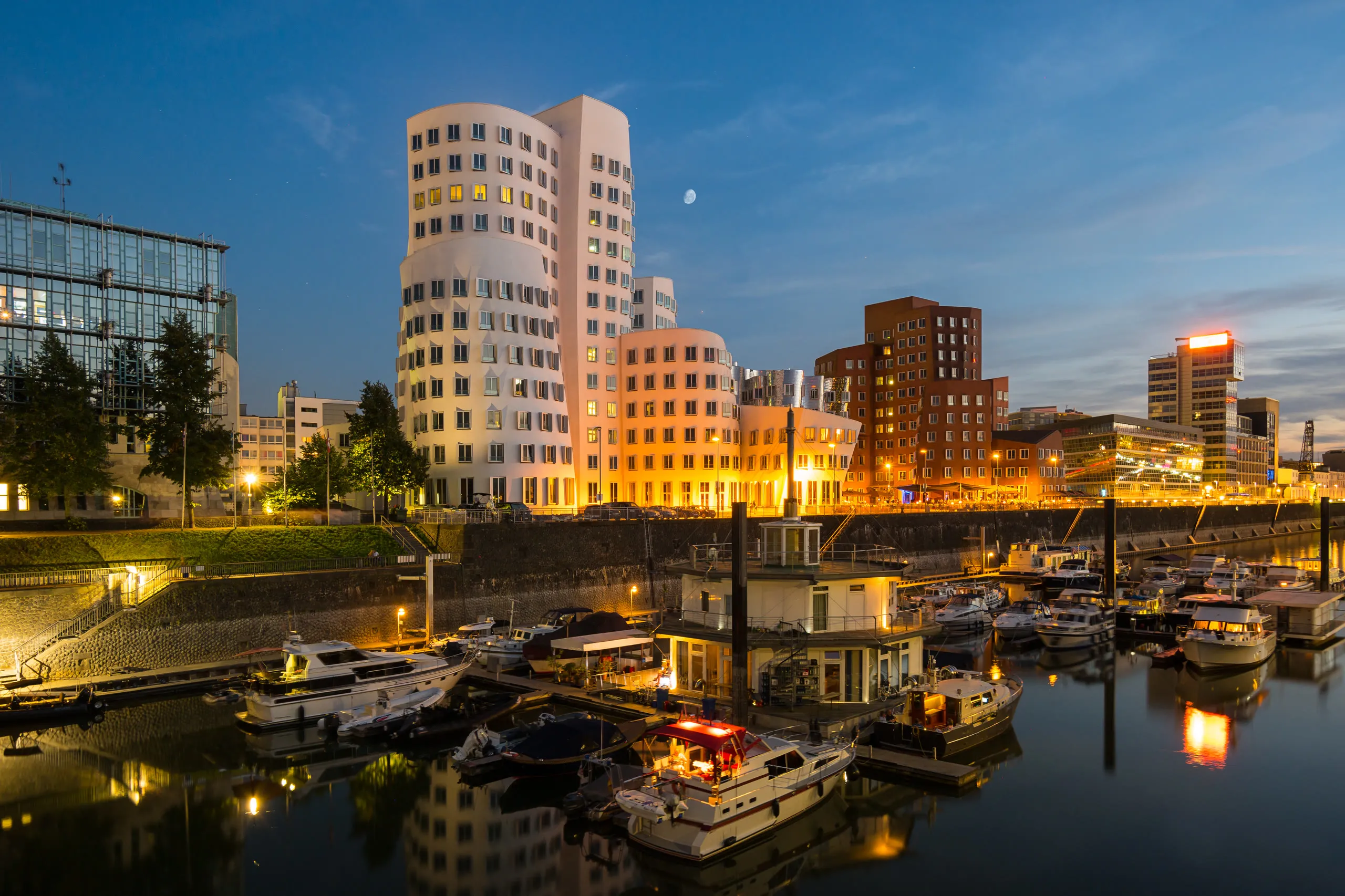
The clinic is on the left bank of the Rhine in Lörick, in the Am Seestern business district near the B7. The U77 runs directly from the main station to the Am Seestern stop, and there is free parking on the grounds. This makes the clinic easy to reach from all over Düsseldorf, from Meerbusch, Neuss and the surrounding area.
02
Spider veins are usually harmless but are often found bothersome
Spider veins are small veins on the legs and are usually an aesthetic problem. As with other vein conditions, such as varicose veins, a disorder of the veins underlies them: when veins close to the surface of the skin widen, the blood vessels become visible through the skin. Spider veins on their own are not necessarily dangerous, but often point to weak connective tissue in the legs and can be a forerunner of larger vein problems.
The type and severity of vein conditions can be determined with special examinations. Diagnostics provide information about the condition of the veins and the extent of a possible vein disease and are the basis for choosing the therapy.
At the start of the consultation your treating doctor takes your medical history. Besides earlier thromboses and vein inflammations, vein diseases in the family also give indications of a possible susceptibility to varicose veins and vein conditions. The frequently used Doppler ultrasound examination measures the direction and speed of blood flow in the veins. Sometimes an ultrasound image of the vessels is also produced in order to assess the condition and function of the veins more precisely.
03
What methods are there for treating spider veins?
Spider veins can be treated with two methods. In sclerotherapy (microsclerotherapy), a sclerosing agent is injected into the small veins. It damages the inner wall of the vessel in a targeted way, so that a small, controlled blood clot forms. After some time the visible small vein turns into a fine cord, which as a rule can no longer be seen. In some cases a light treatment is an alternative option, for example with laser or IPL (intense pulsed light). Here the small veins are heated and damaged through the skin; the body then breaks them down within a few weeks.
Before treatment we examine the flow conditions and the condition of the vein valves. Because spider veins differ greatly from person to person, our doctors decide only after this preliminary examination which method is suitable for you.
The methods used at Klinik am Seestern are clinically tested.
A treatment takes about 20 to 30 minutes per session. Major discomfort is generally not to be expected; you can go home straight after the treatment and move around freely. Exercise is also possible afterwards.
04
What risks does sclerotherapy of spider veins carry?
Sclerotherapy of spider veins is a widely used routine treatment. Nevertheless there are risks and side effects, for example allergic reactions to the sclerosing agent, the formation of new small spider veins, accidental injection into the surrounding tissue, disorders of skin sensation and thromboses. Have the risks explained to you in detail before the treatment.
05
Goals of spider vein treatment
Reduction of visible spider veins on the legs
Assessment of the veins through diagnostics to identify vein diseases that need treatment
Outpatient treatment without anaesthesia
06
What is behind spider veins?
Spider veins appear directly beneath the surface of the skin as very fine, reddish to bluish branchings of the veins on the thighs and lower legs. They become visible through leaky vein valves lying deeper or arise in vein diseases such as varicose veins.
Spider veins result from a widening of small veins. Weak connective tissue can intensify this effect. Being overweight, a high-fat diet, smoking, excessive alcohol consumption and hormonal fluctuations can also promote the development of spider veins. Spider veins themselves usually cause no symptoms and are not considered a health hazard. However, they can be the first visible signs of a vein disease that should be treated by a doctor.
To improve the appearance of the skin, the small veins are treated with sclerotherapy. There are various methods for this, which are usually carried out without anaesthesia.
07
How are spider veins treated at Klinik am Seestern?
Spider veins can be treated with laser, radiofrequency, electric current or flash lamp (IPL). Sclerotherapy or microsclerotherapy is frequently used. Here, an active substance is injected with a fine needle into the centres of the vessel branchings. It triggers a controlled inflammation of the vessel walls. The blood in the affected small veins clots and is broken down by the body, and the vessel walls stick together. Pressure bandages are then applied to the puncture sites.
08
Course of spider vein treatment at Klinik am Seestern
This is how spider vein treatment proceeds at Klinik am Seestern in Düsseldorf, from the examination to the result:
Step 1
Beforehand
Consultation and examination. We take your medical history, examine the flow conditions and the condition of the vein valves, and then decide whether sclerotherapy or a light treatment is suitable for you. You can book your appointment online.
Step 2
On the day of treatment
About 20 to 30 minutes, outpatient. Anaesthesia is usually not necessary. After sclerotherapy, pressure bandages are applied to the puncture sites; you can go straight home and move around freely.
Step 3
2 to 3 weeks afterwards
No sun, no heat. During this time, avoid sunbathing, sunbeds and saunas.
Step 4
After a few weeks
The result. The body breaks down the treated small veins, after which they are usually no longer visible. Because each small vein is treated individually, several sessions are often necessary.
09
What does spider vein treatment cost in Düsseldorf? Costs and financing
The costs depend on the extent of the spider veins (area, number, intensity). If there is no medical indication, treating spider veins is a self-pay service. Costs start at about €200 per session. Because each small vein is treated individually, several sessions are often necessary.
In the case of a disease of the truncal veins, sclerotherapy of spider veins is often carried out as part of a medically necessary treatment. Whether the costs are then covered depends on your insurance: private health insurers cover medically necessary treatments depending on the policy; people with statutory insurance should clarify cost coverage in advance with their German statutory health insurance. After the consultation we put together an individual treatment quote for you. Financing is possible through our financing partner; more on this under Financing your treatment.
10
Frequently asked questions
Are spider veins dangerous?
Spider veins on their own are not necessarily dangerous but above all an aesthetic problem. However, they often point to weak connective tissue in the legs and can be a forerunner of larger vein diseases, for example of varicose veins (varicosis).
Is anaesthesia necessary if I have my spider veins treated with sclerotherapy?
Anaesthesia or sedation is usually not required. If dividing connecting veins is necessary before sclerotherapy, this is done under local anaesthesia.
What risks are there if I have my spider veins treated with sclerotherapy?
Sclerotherapy of spider veins is a widely used treatment method. Possible risks and side effects are allergic reactions to the sclerosing agent, the formation of new small spider veins, accidental injection into the surrounding tissue, disorders of skin sensation and thromboses. Have our doctors explain the risks to you in detail before the treatment.
What do I need to bear in mind after spider vein treatment?
After the treatment, avoid direct sunlight such as sunbathing and sunbeds, as well as great heat, for example in the sauna, for at least 2 to 3 weeks.
What does spider vein treatment cost in Düsseldorf?
The costs depend on the area, number and extent of the spider veins and start at about €200 per session; several sessions are often necessary. Without a medical indication the treatment is a self-pay service. After your consultation at Klinik am Seestern you will receive an individual treatment quote. Financing is possible through our financing partner.
Where in Düsseldorf are spider veins treated?
The consultation, examination and treatment take place at Klinik am Seestern, Am Seestern 4 in 40547 Düsseldorf-Lörick. The clinic is on the left bank of the Rhine, near the B7; the U77 runs directly from the main station to the Am Seestern stop, and there is free parking on the grounds.
I am a lipoedema and lymphoedema patient and have been trying to find help for about 10 years. Here it was no problem at all! I was called in quickly, was well looked after, my questions were answered very professionally, and I was able to leave the practice in tears of joy! Many thanks for the support so far.
Alina · October 2026
The friendliness of everyone I dealt with.
Anonymous · July 2026
I had my appointment at the practice for a consultation about my lipoedema, and I really want to leave a review even though I haven't had any surgery there yet. The reason is that this was the first time I felt truly taken seriously during an examination of my lipoedema. Dr. Witt was very friendly and professional from the start, and at the same time incredibly pleasant and humane. He took an exceptional amount of time, examined me very thoroughly and answered all my questions in detail. He is incredibly respectful and explains realistically what could be done and how the whole process would work. I found it particularly positive that at no point did a hectic or unpleasant mood arise. You never had the feeling of being “brushed off” or being under time pressure. Instead, the whole atmosphere was calm, relaxed and trusting. Dr. Witt was very committed, photos were taken of the affected areas and every possible treatment was explained in an understandable way. Dr. Witt explained everything in detail, yet never came across as complicated or distant. Although he is an absolute specialist in his field, I felt at all times that I could speak openly and ask any question. It felt more as if I had been a patient there for a long time. It was also particularly important to me that I never felt pushed towards an operation. It is still not at all clear whether I will have my operation at all, and yet I was taken incredibly seriously and treated with respect. That is exactly what built so much trust in me. I would also very much like to mention the lady at reception, Marris, in a positive way. She was super polite, had a very pleasant and calm manner and immediately gave me a good feeling. Although it was almost 5 p.m. and the end of the working day was approaching, she was incredibly friendly to me and did not seem at all annoyed or stressed. It is precisely such little things that make a huge difference to me personally and reinforced my positive overall impression of the practice. The practice itself is also absolutely impressive. It is extremely modern, high-quality and stylishly furnished. You feel more as if you are entering a luxury hotel than a traditional doctor's practice. Everything seems very well thought out, calm and professional. The organisation around the appointment was also excellent. Even before the appointment, communication was always very friendly, quick and professional. Questions were answered immediately and the whole process seemed perfectly organised. I was also allowed to park in the clinic's car park, which was an enormous relief since everything in the area was completely full. Although it was already later in the afternoon, Dr. Witt even personally saw to it that enquiries were made internally about my question regarding costs. Shortly after I had left the practice, I already received all the information by email. That too simply shows how professionally and attentively they work there. Overall, an exceptionally positive experience, of a kind you unfortunately only rarely have in the medical field. Absolutely fabulous.
Kerasoula P. · June 2026
Very beautiful clinic, wonderful reception and great service. The consultation with the doctor was very comprehensive and she addressed all my questions, which is all you could wish for as a patient / customer. I will definitely have my treatment done here.
Sandra W. · April 2026
Dr. Bromba took the time and advised me very well.
Anonymous · April 2026
A very kind doctor. I felt very comfortable from the first moment!
Elisabeth-katrin · March 2026
Everything was great, just one small remark..... I didn't get any dinner/bread in the evening. The most important thing for me was the operation, or rather everything around it.
Mix · February 2026
I was welcomed and advised incredibly kindly. The consultation takes place on an equal footing and without medical jargon, and what I like best is that they paid attention to what the best treatment is for my concern, and not to what would earn the practice the most money. I took a week to think it over, but actually the decision to choose the clinic was made much sooner.
Anonymous · January 2026
Everyone was very friendly, especially the nurses.
Anonymous · October 2025
I had a consultation and felt taken seriously and understood. They took a lot of time for me, and the examination and the conversation were very thorough. In the end, the treatment is too expensive for me, so I won't be able to have it done.
Anonymous · October 2025
Very competent and friendly consultation.
Anonymous · October 2025
Very competent consultation, super friendly staff!
Anonymous · September 2025
Medical assistant with partly insufficient professional competence.
Andreas M. · August 2025
Very competent consultation and medical examinations. I feel very well looked after.
BrigitteM · August 2025
I really liked the super friendly manner of the ladies at reception, and also that the doctor took the time to see and advise me, as well as the nice lady who went through the cost plan with me. I felt wonderfully looked after and will definitely have my treatment there. Thank you once again for everything so far.
Astrid R. · August 2025
A conversation in peace and without time pressure. I felt very well looked after.
Anonymous · August 2025
I was welcomed very nicely. The doctor was also very nice and answered all my questions. She also showed understanding that one does not decide straight away.
Anonymous · July 2025
Dr. Bromba's calm, matter-of-fact manner and his competence really convinced me during the consultation.