Varicose veins (varices) are widespread and can cause symptoms. They are not just a cosmetic issue but a disease of the veins that should be assessed by a doctor. At the Klinik am Seestern in Düsseldorf, we examine your veins and treat varicose veins on an outpatient basis with endovenous laser or radiofrequency.
local anaesthesia, twilight sedation or anaesthesia
Stay in the clinic
outpatient
At a glance
Everything important about the procedure
Duration of surgery
about 30 to 45 minutes
Anaesthesia
local anaesthesia, twilight sedation or anaesthesia
Stay in the clinic
outpatient
Back out among people
after approx. 3 to 4 days
Financing
possible through our financing partner
Removing varicose veins in Düsseldorf: examination and treatment in one place
Consultation, vein examination, treatment and aftercare take place at the Klinik am Seestern in Düsseldorf. The diseased vein is closed from the inside with the endovenous laser or with radiofrequency.
The treatment is outpatient, manages without a larger incision and is usually carried out under local anaesthesia. You can leave the clinic the same day.
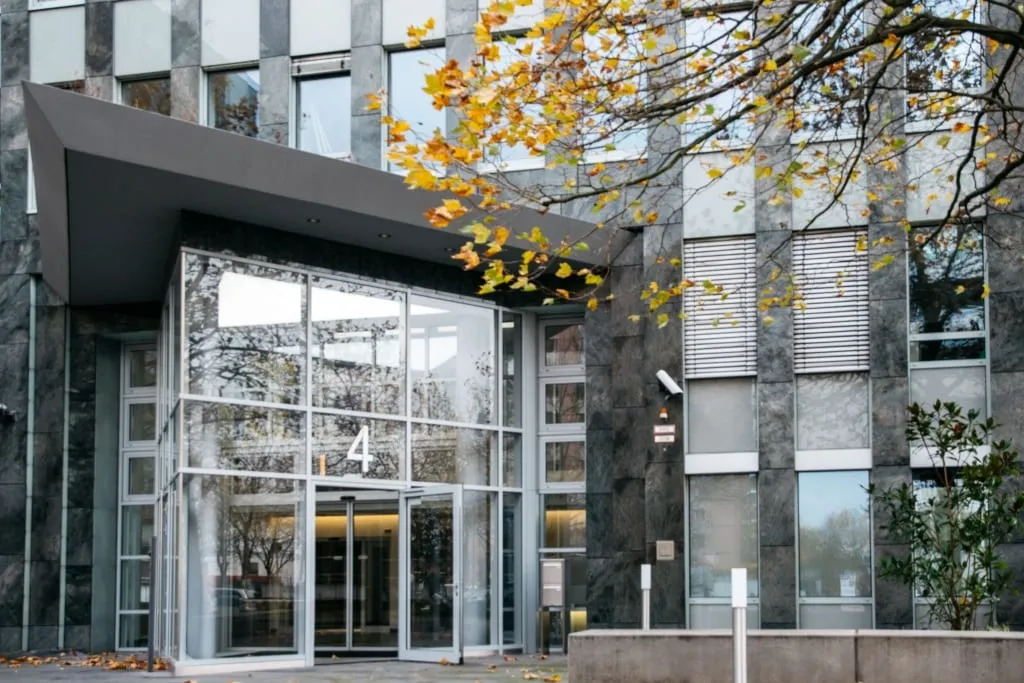
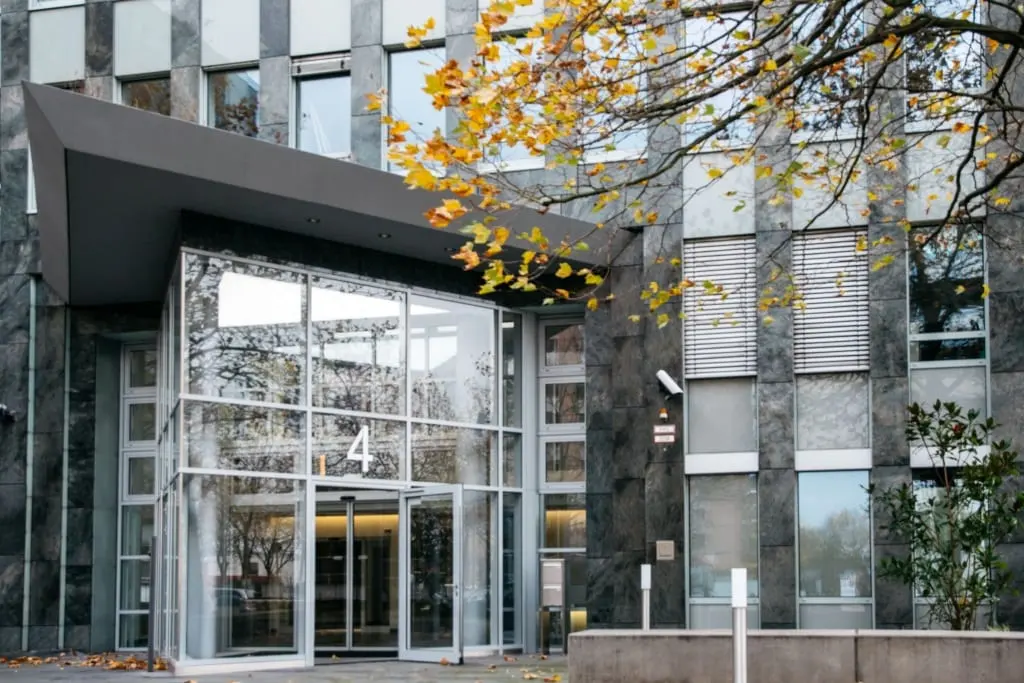
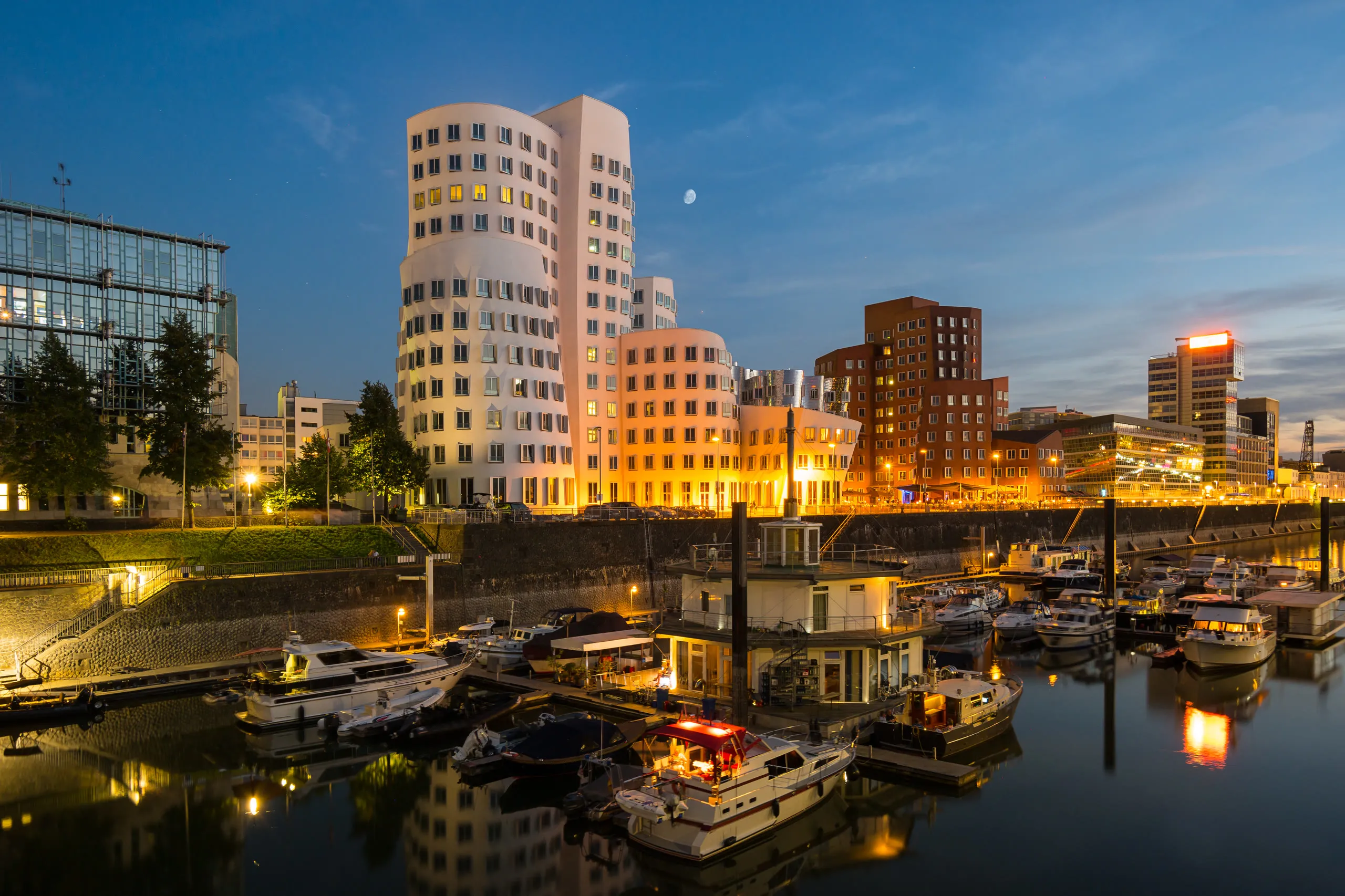
The clinic is on the left bank of the Rhine in Lörick, in the Am Seestern business district near the B7. The U77 runs directly from the main station to the Am Seestern stop, and there is free parking on the grounds. This makes the clinic easy to reach from all over Düsseldorf, from Meerbusch, Neuss and the surrounding area.
Treatment
Type of appointment
Appointment
Your details
Confirm
Which treatment are you interested in?
Click on the area you are interested in:
No matching treatment found. Choose “Still undecided?” in an area and we will call you.
Varicose veins are a disease of the superficial veins
In vein diseases, a distinction is made between the superficial and the deep venous system. Varicose veins belong to the superficial venous system.
Superficial venous system
A disease of the superficial venous system shows itself in the formation of varicose veins (varices) and their complications. These include inflammation, bleeding from varicose veins and leg ulcers.
Deep venous system
A disease of the deep venous system, by contrast, means a considerable disturbance of the return flow of blood, which in the long term can lead to a chronic venous disease. Diseases of the deep veins can result, for example, in thromboses, a pulmonary embolism or permanent damage to the venous valves.
Vein diseases should be examined and treated in good time
Whether a superficial or a deep vein disease: left untreated, both can considerably impair the function of the veins.
The course ranges from an initial tendency of the legs to swell, through skin discolouration, to an open leg (ulcus cruris venosum). This is why it is worth having symptoms examined early.
Endovenous procedures for treating varicose veins
Modern procedures include endovenous laser treatment (ELVeS Radial™, Intros Lina) and the radiofrequency procedure (VNUS Closure Fast™, Celon RFITT). Both procedures are established and differ mainly in their technical application. Both manage without larger incisions and are usually less stressful for patients than conventional surgery.
In endovenous laser treatment, a laser fibre is inserted into the vein through a small opening in the skin, similar to an infusion or a blood draw. It delivers energy to the vein wall in a targeted way and thereby closes the vein. In many cases, this makes it possible to avoid open surgery on the leg veins.
Varicose veins are not a mere cosmetic flaw but a health risk to be taken seriously. We examine your veins and advise you on possible treatment.
Aims of varicose vein treatment
Closure of the diseased vein without a larger incision
Outpatient treatment, usually without general anaesthesia; you can go home after the procedure
Quick return to everyday life and work
How does varicose vein treatment work at the Klinik am Seestern?
Two procedures are options for the treatment of varicose veins: endovenous laser treatment (ELVeS Radial™ or Intros Lina) and the radiofrequency procedure (VNUS Closure Fast™, Celon RFITT). In both procedures, a small probe is inserted into the diseased vein through a puncture site in order to close the vein in a controlled way.
Depending on the findings and tolerance, the treatment is carried out under local anaesthesia, twilight sedation or anaesthesia. The procedure takes about 30 to 45 minutes. You can get up immediately afterwards and should keep moving with exercises and walking. A return to everyday life is usually possible shortly after the treatment.
Endovenous treatment in detail
The endovenous procedures are carried out on an outpatient basis and manage without a larger incision. The procedure takes place in four steps:
01
Inserting the probe
First, the probe is inserted into the vein under ultrasound guidance.
02
Delivering energy
Then the laser or the radiofrequency device is activated and the fibre is slowly withdrawn.
03
Closing the vein
The energy delivered generates heat, which causes the vein to contract and close.
04
Breakdown by the body
The body breaks down the closed vein in the months after the treatment.
Your schedule at the Klinik am Seestern
This is how varicose vein treatment proceeds at the Klinik am Seestern, from the examination to the breakdown of the vein:
Step 1
Beforehand
Consultation and vein diagnostics. We take your medical history, examine your legs standing and lying down and check the blood flow with Doppler ultrasound. We then discuss whether and how your varicose veins will be treated. You can book your appointment online.
Step 2
On the day of treatment
About 30 to 45 minutes, outpatient. Under ultrasound guidance, a probe is inserted into the vein and the vein is closed with laser or radiofrequency, depending on the findings under local anaesthesia, twilight sedation or anaesthesia.
Step 3
Straight afterwards
Get up and walk. You can get up immediately after the procedure and should keep moving with exercises and walking. Afterwards you go home.
Step 4
After 3 to 4 days
Back to everyday life. You are usually back out among people after three to four days.
Step 5
In the following months
The vein is broken down. The body breaks down the closed vein. How quickly bruises and swelling subside varies from person to person.
What does varicose vein treatment cost in Düsseldorf? Costs and financing
The costs depend on your findings and the procedure. After your consultation at the Klinik am Seestern, you will receive an individual treatment quote. Financing is possible through our financing partner, more under Financing your treatment.
Whether your insurance covers the costs depends on medical necessity:
PRIVATELY INSURED
Private health insurers cover medically necessary treatments in full or in part, depending on the plan.
BEIHILFE (GERMAN CIVIL SERVICE ALLOWANCE)
Beihilfe also covers medically necessary treatments in full or in part, depending on the Beihilfe regulations.
STATUTORILY INSURED
People with German statutory health insurance can apply to their health insurer for cost cover before the treatment; a personal contribution often remains.
Please clarify cost cover with your insurer before the treatment.
Consultation at the Klinik am Seestern
At the Klinik am Seestern in Düsseldorf, vein treatment is carried out by endovenous laser or radiofrequency therapy, as the case may be. Arrange a consultation to have your veins examined and to discuss the treatment options.
Other treatment options for varicose veins
Varicose veins are often treated for aesthetic reasons, but treatment also makes sense for medical reasons. Besides the endovenous procedures, there are other treatment options:
Compression therapy
Compression stockings exert pressure on the veins from outside and thereby reduce the cross-section of the veins. The return flow of blood is accelerated and swelling goes down. Because veins that have once widened do not narrow again, compression therapy works only for as long as it is used.
Vein stripping
In vein stripping, the diseased veins are surgically removed from the leg. This treats the cause of the disease; however, the procedure is more stressful and can be associated with side effects. The recovery time is usually three weeks or more.
Sclerotherapy with foam
A special foam is injected into the vein. It triggers an inflammation of the vein wall, the vein scars and closes. This method also carries risks such as allergic reactions, local death of skin tissue, excessive sclerosing reactions, nerve damage, migraine-like symptoms, circulatory collapse or thromboembolism.
Recognising vein diseases early
The type and severity of vein diseases such as phlebitis can be determined by special examinations. Vein diagnostics provide information on the condition of your veins and the extent of any vein disease and form the basis for choosing the therapy. The examination is built up in stages:
Anamnesis
At the start, your doctor takes your medical history (anamnesis). Besides earlier thromboses and phlebitis, vein diseases in the family also give indications of a possible predisposition to varicose veins.
Examination standing and lying down
Your legs are then examined in different body positions, since varicose veins usually fill when standing and go down when lying. This first impression can be checked more precisely with various methods.
Doppler ultrasound
The most frequently used Doppler ultrasound examination measures the direction and speed of blood flow in the veins. Sometimes an ultrasound image of the vessels is also made in order to assess the condition and function of the veins more precisely.
Phlebography
In individual cases, an X-ray examination (phlebography) can also provide information on the shape of the veins, valve function and flow direction of the blood.
If you suspect a vein disease, you can contact the Klinik am Seestern in Düsseldorf. We examine your veins and show you possible therapy options.
Frequently asked questions
How do endovenous procedures differ from vein stripping?
Unlike surgical vein stripping, endovenous laser and radiofrequency treatment are carried out on an outpatient basis under local anaesthesia or twilight sedation, or under anaesthesia depending on the findings. The vein is treated through a small puncture site; larger incisions are not necessary. The treatment takes comparatively little time, and you can usually resume your daily activities quickly. As with any procedure, side effects such as bruising or pain are possible.
When will I see the result of varicose vein treatment?
In treatment with the endovenous laser or by radiofrequency, the diseased vein is closed during the procedure. Afterwards you can quickly return to your normal activities. The body breaks down the closed vein over the following months. How quickly bruises and swelling subside varies from person to person.
What risks does varicose vein treatment carry?
Endovenous laser or radiofrequency treatment is a minimally invasive procedure. Nevertheless, as with any procedure, risks and side effects can occur. Your individual situation should therefore be assessed by a doctor beforehand. In a personal consultation, we explain the risks to you.
Does my German health insurance cover the costs of varicose vein treatment?
That depends on medical necessity and on your insurance. Private health insurance covers the costs of medically necessary treatment in whole or in part, depending on the plan, and Beihilfe (German civil service allowance) depending on the Beihilfe regulations. People with statutory cover can apply for cost cover from their German statutory health insurance before treatment; a personal contribution often remains. Please clarify cost cover with your insurer before treatment. Financing is possible through our financing partner.
Can I prevent varicose veins from developing?
Exercise in everyday life is important. People who sit a lot at work or stand for long periods should pay particular attention to getting enough exercise. Even a walk in the lunch break or after work stimulates vein activity. Getting up in between and marching on the spot for a few minutes also helps. Sports that work the leg muscles are particularly suitable for prevention, such as running, hiking, swimming or cycling.
What does varicose vein treatment cost in Düsseldorf?
The costs depend on your findings and the procedure. If the treatment is medically necessary, private health insurance covers the costs in whole or in part, depending on the plan, and Beihilfe (German civil service allowance) depending on the Beihilfe regulations; people with statutory cover can apply for cost cover from their German statutory health insurance in advance. After your consultation at the Klinik am Seestern, you will receive an individual treatment quote. Financing is possible through our financing partner.
Where in Düsseldorf are varicose veins treated?
Consultation, examination, treatment and aftercare take place at the Klinik am Seestern, Am Seestern 4 in 40547 Düsseldorf-Lörick. The clinic is on the left bank of the Rhine near the B7, the U77 runs directly from the main station to the Am Seestern stop, and there is free parking on site.
Book consultation
Find your consultation appointment now
Your consultation in 3 steps:
Choose treatment
Choose preferred appointment
confirm by code
Treatment
Type of appointment
Appointment
Your details
Confirm
Which treatment are you interested in?
Click on the area you are interested in:
No matching treatment found. Choose “Still undecided?” in an area and we will call you.
I am a lipoedema and lymphoedema patient and have been trying to find help for about 10 years. Here it was no problem at all! I was called in quickly, was well looked after, my questions were answered very professionally, and I was able to leave the practice in tears of joy! Many thanks for the support so far.
Alina · October 2026
The friendliness of everyone I dealt with.
Anonymous · July 2026
I had my appointment at the practice for a consultation about my lipoedema, and I really want to leave a review even though I haven't had any surgery there yet. The reason is that this was the first time I felt truly taken seriously during an examination of my lipoedema. Dr. Witt was very friendly and professional from the start, and at the same time incredibly pleasant and humane. He took an exceptional amount of time, examined me very thoroughly and answered all my questions in detail. He is incredibly respectful and explains realistically what could be done and how the whole process would work. I found it particularly positive that at no point did a hectic or unpleasant mood arise. You never had the feeling of being “brushed off” or being under time pressure. Instead, the whole atmosphere was calm, relaxed and trusting. Dr. Witt was very committed, photos were taken of the affected areas and every possible treatment was explained in an understandable way. Dr. Witt explained everything in detail, yet never came across as complicated or distant. Although he is an absolute specialist in his field, I felt at all times that I could speak openly and ask any question. It felt more as if I had been a patient there for a long time. It was also particularly important to me that I never felt pushed towards an operation. It is still not at all clear whether I will have my operation at all, and yet I was taken incredibly seriously and treated with respect. That is exactly what built so much trust in me. I would also very much like to mention the lady at reception, Marris, in a positive way. She was super polite, had a very pleasant and calm manner and immediately gave me a good feeling. Although it was almost 5 p.m. and the end of the working day was approaching, she was incredibly friendly to me and did not seem at all annoyed or stressed. It is precisely such little things that make a huge difference to me personally and reinforced my positive overall impression of the practice. The practice itself is also absolutely impressive. It is extremely modern, high-quality and stylishly furnished. You feel more as if you are entering a luxury hotel than a traditional doctor's practice. Everything seems very well thought out, calm and professional. The organisation around the appointment was also excellent. Even before the appointment, communication was always very friendly, quick and professional. Questions were answered immediately and the whole process seemed perfectly organised. I was also allowed to park in the clinic's car park, which was an enormous relief since everything in the area was completely full. Although it was already later in the afternoon, Dr. Witt even personally saw to it that enquiries were made internally about my question regarding costs. Shortly after I had left the practice, I already received all the information by email. That too simply shows how professionally and attentively they work there. Overall, an exceptionally positive experience, of a kind you unfortunately only rarely have in the medical field. Absolutely fabulous.
Kerasoula P. · June 2026
Very beautiful clinic, wonderful reception and great service. The consultation with the doctor was very comprehensive and she addressed all my questions, which is all you could wish for as a patient / customer. I will definitely have my treatment done here.
Sandra W. · April 2026
Dr. Bromba took the time and advised me very well.
Anonymous · April 2026
A very kind doctor. I felt very comfortable from the first moment!
Elisabeth-katrin · March 2026
Everything was great, just one small remark..... I didn't get any dinner/bread in the evening. The most important thing for me was the operation, or rather everything around it.
Mix · February 2026
I was welcomed and advised incredibly kindly. The consultation takes place on an equal footing and without medical jargon, and what I like best is that they paid attention to what the best treatment is for my concern, and not to what would earn the practice the most money. I took a week to think it over, but actually the decision to choose the clinic was made much sooner.
Anonymous · January 2026
Everyone was very friendly, especially the nurses.
Anonymous · October 2025
I had a consultation and felt taken seriously and understood. They took a lot of time for me, and the examination and the conversation were very thorough. In the end, the treatment is too expensive for me, so I won't be able to have it done.
Anonymous · October 2025
Very competent and friendly consultation.
Anonymous · October 2025
Very competent consultation, super friendly staff!
Anonymous · September 2025
Medical assistant with partly insufficient professional competence.
Andreas M. · August 2025
Very competent consultation and medical examinations. I feel very well looked after.
BrigitteM · August 2025
I really liked the super friendly manner of the ladies at reception, and also that the doctor took the time to see and advise me, as well as the nice lady who went through the cost plan with me. I felt wonderfully looked after and will definitely have my treatment there. Thank you once again for everything so far.
Astrid R. · August 2025
A conversation in peace and without time pressure. I felt very well looked after.
Anonymous · August 2025
I was welcomed very nicely. The doctor was also very nice and answered all my questions. She also showed understanding that one does not decide straight away.
Anonymous · July 2025
Dr. Bromba's calm, matter-of-fact manner and his competence really convinced me during the consultation.